

Aging in Place: The Family Guide to Staying Home
75% of adults 50+ / AARP 2024
Staying home is a plan, not a wish, and the plan is mostly small decisions made early.
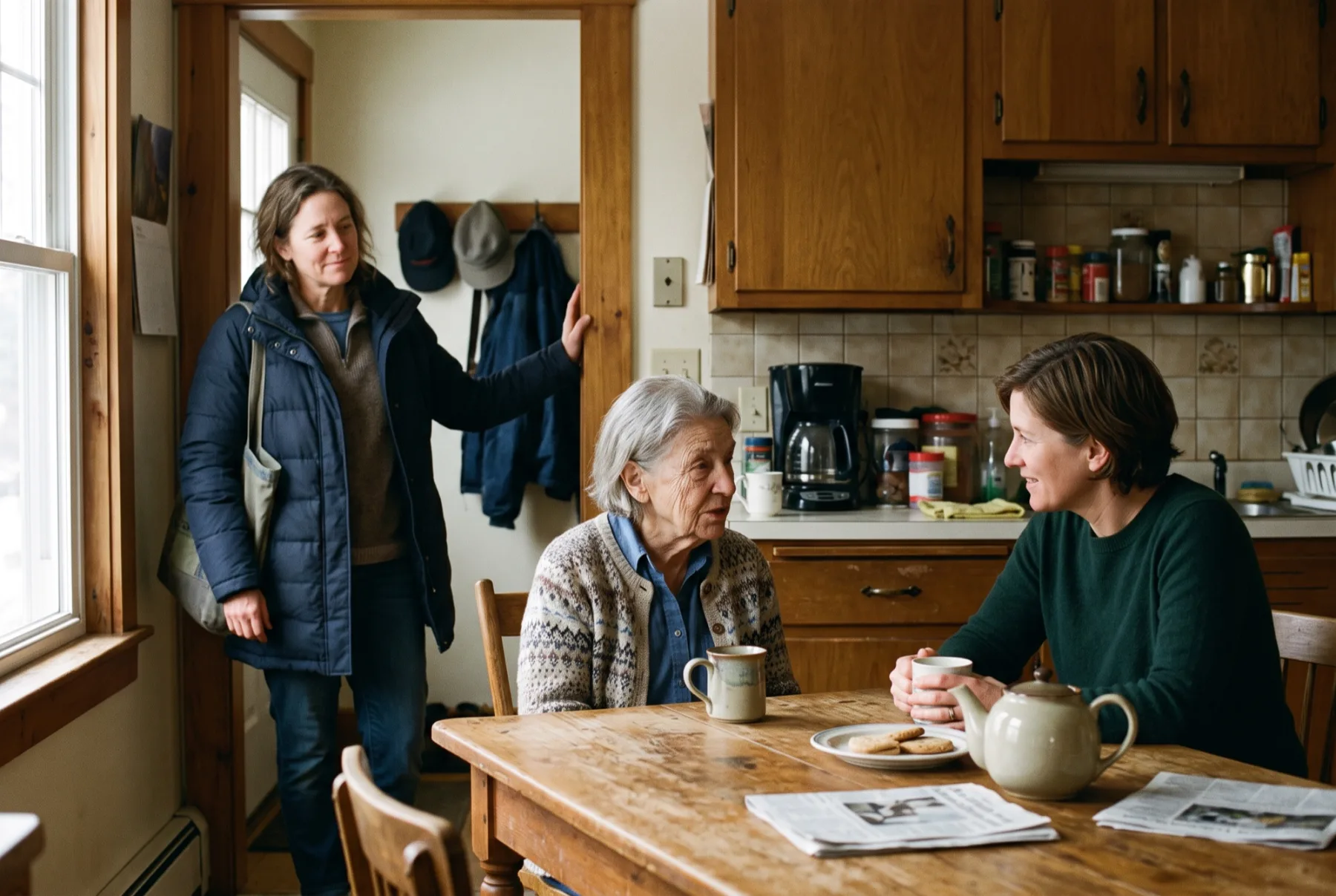
Aging in place, the plan 75% of adults 50 and older name for their own homes in AARP's 2026 figures, is what Endurance Home Care, a Stamford, Connecticut homemaker companion agency, exists to make workable.
What aging in place actually means
A plan drawn on the house you already have
Aging in place is the decision to grow older in your own home and your own town instead of moving into a facility. It is not one choice made once. It is a sequence of small ones: a grab bar this spring, a ride to the cardiologist next fall, two mornings a week of help the winter after that. The National Institute on Aging, which publishes the guide Aging in Place: Growing Older at Home, frames it the same way, as a planning project rather than a preference. Think of it as tracing paper laid over the same lot year after year. The lot lines do not move. What sits on top of them gets redrawn as the household changes.
Who this guide is for
Mostly it is for the adult child who started reading this week, not last year, because something at the house changed. You do not need the whole plan today. You need to know what the pieces are, what they cost in Connecticut, and which one comes first.
of adults 50 and older want to remain in their current homes as they age, and 73% hope to stay in their communities.
AARP Home and Community Preferences Survey, 2024
Where the phrase comes from
It is federal-agency vocabulary before it is marketing vocabulary. The National Institute on Aging still holds the top result for the term, and its guide is the plain-language version worth reading first.
What it is not
It is not doing everything alone, and it is not medical care. daily-living support is help with the day: company, meals, errands, rides, reminders, and someone within earshot.
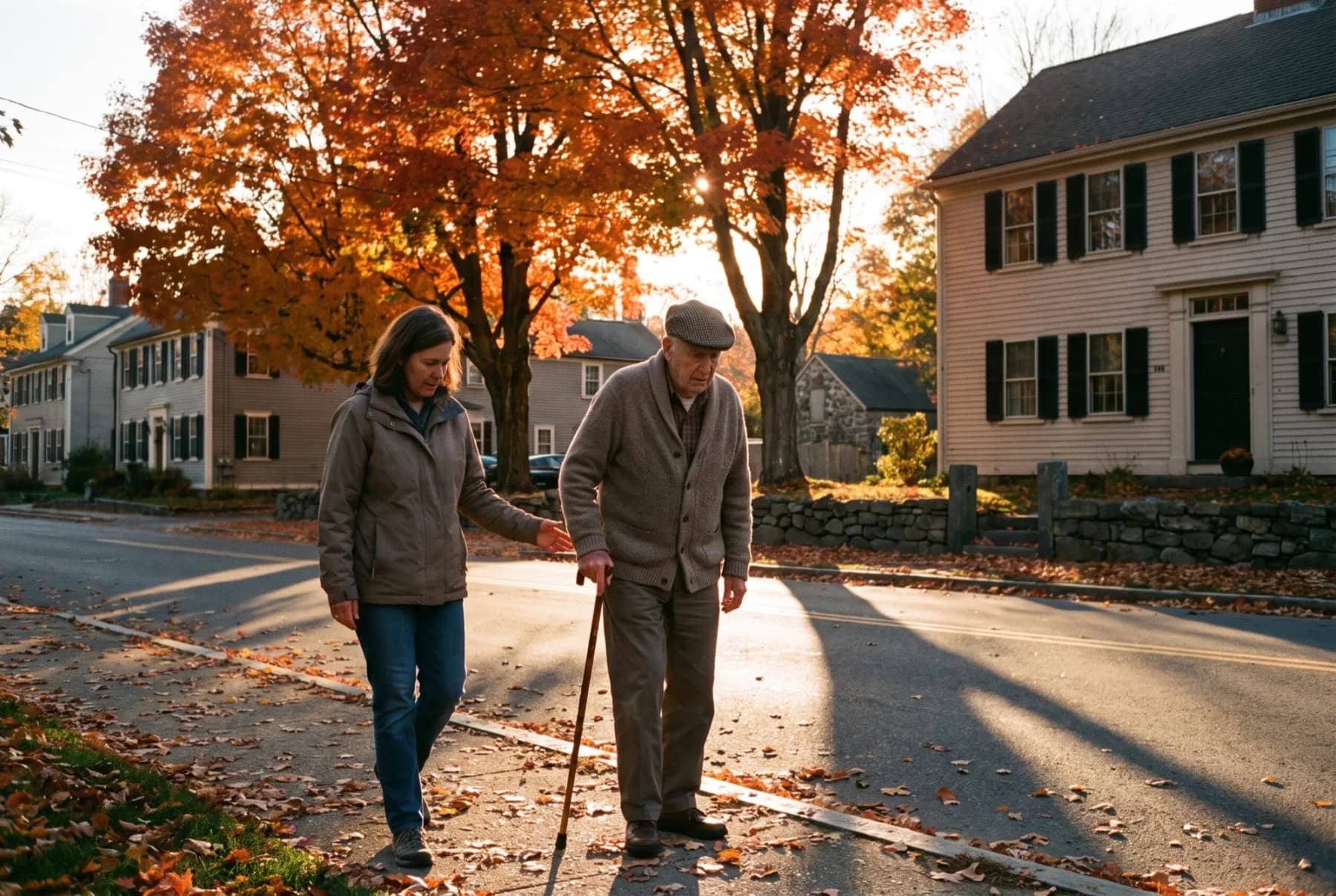
Wanting to stay and being able to stay are two different surveys
of the roughly 115 million US housing units are aging-ready. US Census Bureau.
Aging-ready is a narrow, physical definition: step-free entry, a bedroom and a full bathroom on the main floor, and grab bars where they are needed. Most American houses were built for people who take stairs without thinking about them. Connecticut housing stock is older than most, which is why the gap between the 75% who want to stay and the homes that are set up for it is the real work of aging in place.
Readiness has two halves. One is the building: thresholds, lighting, the tub, the stairs. The other is coverage: who is in the house when the hard hours arrive, and what happens on the morning nobody is available. A house can pass the first test and fail the second. Most families discover the second half after a fall, which is the expensive order to discover it in.
Start with the building, because it is the part you can finish. Walk the house once with a home safety checklist for seniors, then take the two items that come up in nearly every house first: fall prevention steps for older adults and bathroom safety for older adults. The larger projects, the ramp and the first-floor bedroom, belong on the list of home modifications that make staying put workable.

The Connecticut math
Families usually assume staying home is the expensive option. In Connecticut the numbers do not settle that cleanly. Long Term Care Navigator put the 2026 Connecticut figures side by side, and the comparison depends almost entirely on how many hours you actually need covered.
- In-home care, 40 hours a week
- $6,864 per month
- Assisted living, median
- $9,118 per month
- Nursing home, semi-private room
- $15,208 per month
Long Term Care Navigator, 2026 Connecticut figures.
Read it as a break-even rather than a verdict. Hourly help for a few mornings a week costs a fraction of a facility. Around-the-clock coverage can run past one. The honest answer is that nobody can tell you which side you land on until somebody counts the hours your household actually needs, which is the first thing the consultation does.
“We had planned on assisted living, but the most cost effective choice was to keep her at home.”
Published family review
Long term care insurance is the other line in the ledger, and it is the one most families have never read closely. One published review describes sitting down with Tom and Chris to go through a policy, and says plainly that doing so reduced the family stress a great deal. Bring the policy to the consultation. Knowing what it covers before you need it is worth more than any estimate on this page.

The support that makes staying home workable
Support at home is sold in two dimensions: how the hours are scheduled, and what happens during them. Households usually start narrow, one or two mornings a week, and widen from there.
24/7 care and live-ins
Someone in the house around the clock, either a live-in caregiver or awake shifts through the night.
Hourly care
You name the hours that are hard. Mornings, evenings, the two afternoons a week nobody can cover.
Transitional care
The stretch right after a hospital stay, when the house is not set up yet and the paperwork is fresh.
Care in facilities
One to one attention for someone already living somewhere else.
What a caregiver does during those hours
- Memory support at home
- Personal care
- Homemaking
- Companion care
- Transportation
- Medication reminders
- Safety supervision
All of it is daily-living. Caregivers support, coordinate, remind, accompany, and supervise. They do not diagnose, treat, or administer anything. Two of these are the quiet workhorses of staying home: read up on meal preparation help and on medication reminder systems, since a missed lunch and a missed pill are what most households are actually trying to prevent.
Endurance Homebound
A hospital-to-home transition program built around the first 72 hours after discharge, when the house is not yet set up and the instructions are still fresh. It is the stretch where staying home most often stops working, so it gets its own program rather than a slot on a schedule.
Devices belong in the same conversation. See technology that helps seniors stay home for what the audio layer does, which is alert the team so a person can respond.

The visit that decides the rest of it
Every arrangement above starts from the same appointment. At Endurance, a registered nurse conducts the in-home assessment, in the house rather than over the phone, because the house is most of the answer.
The call
One call to the Client Support Line. A person answers it. You describe what changed and when.
In the home
A registered nurse walks the house with the family: the stairs, the bathroom, the kitchen, the hours that are hardest.
The schedule
What comes out of it is a shape. Hourly, live-in, overnight, or transitional coverage, and which services fill those hours.
The match
A caregiver is matched to the household rather than assigned to a slot, and the schedule is meant to change as the need changes.
Endurance Home Care provides care at home in Connecticut and New Jersey, with companion care only in New York. Skilled nursing, home health aides and physical therapy in Connecticut are provided by Endurance Home Health. Connecticut License HCA.0002450 · New Jersey License HP0435100 · Connecticut DPH License 9915786 (Endurance Home Health).
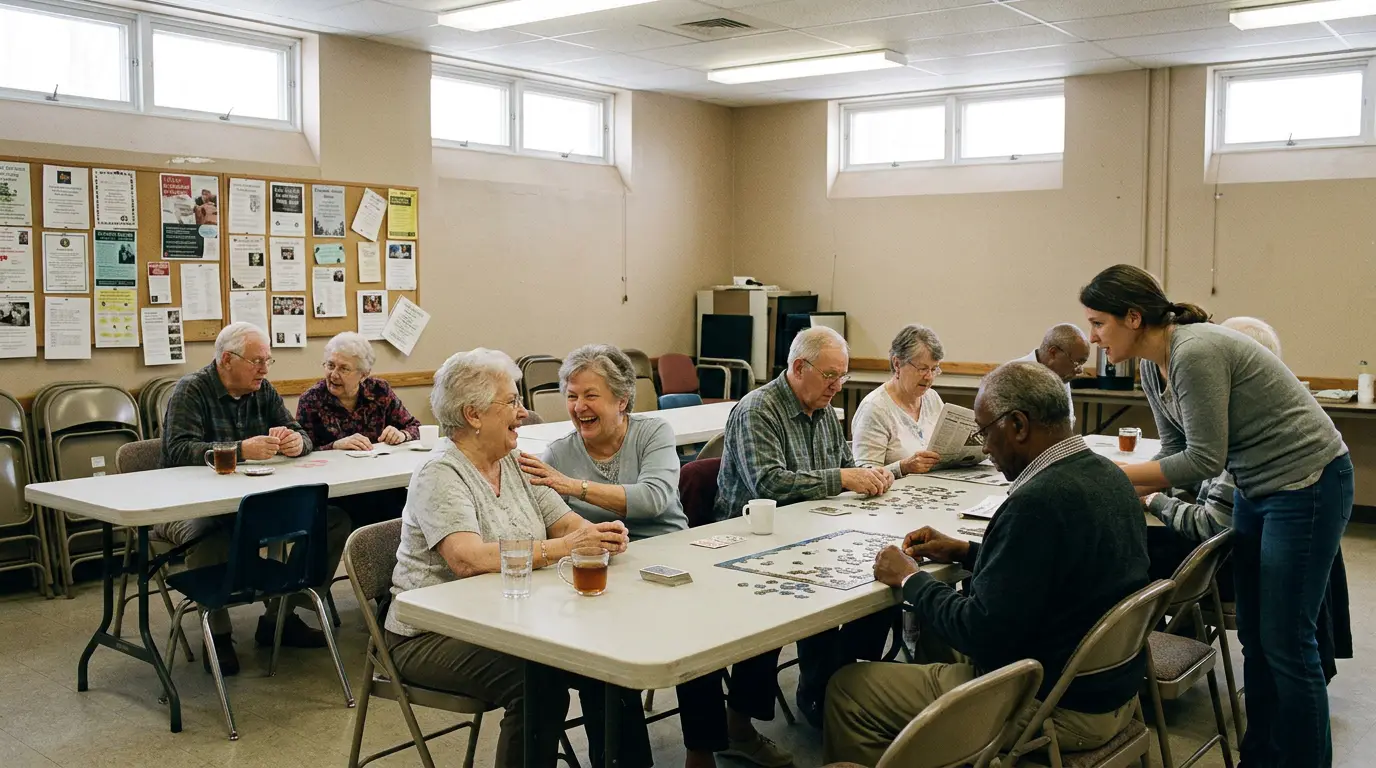
Paid care is one layer. The village organizations in your own town, the member-run networks of neighbors who drive people to appointments and knock on a door on a Tuesday, are another, and they are worth finding early.
Ask what exists near you before you assume nothing does. Endurance serves Fairfield County and New Haven County, Connecticut, and we will tell you plainly which parts of a week are better covered by neighbors than billed to anyone.
Why the timing matters in Connecticut
Connecticut is getting older faster than it is getting bigger. The population aged 65 and over is projected to grow 57% between 2010 and 2040, while the working-age population grows by less than 2%. Those two numbers describe the same shortage from both ends: more households that need help at home, and fewer people available to give it.
Practically, that means availability is the scarce thing, not information. Families who arrange support before a crisis get to choose the schedule and the match. Families who call from a hospital hallway take what is open. Neither situation is anyone’s fault. Only one of them is a plan.
The next step is small on purpose: one call, one visit, one honest count of the hours. Most households begin with companion care at home and add from there as the need changes.
Questions families ask
aging in place
Aging in place means growing older in your own home and community instead of moving to a facility. The National Institute on Aging's guide, Aging in Place: Growing Older at Home, treats it as a planning project: matching daily needs with home changes, support services, and family help as those needs change over time.
Is it cheaper to age in place or move to assisted living?
In Connecticut, 40 hours a week of in-home care runs roughly $6,864 per month in Long Term Care Navigator's 2026 tables, against an $9,118 median for assisted living and $15,208 for a semi-private nursing room. Hourly in-home help often costs less; around-the-clock care can cost more. Run the math on the hours actually needed.
How many older adults want to age in place?
In AARP's 2024 Home and Community Preferences Survey, 75% of adults 50 and older said they want to remain in their current homes as they age, and 73% hope to stay in their communities. Yet only about 10% of US housing units are aging-ready, per the Census Bureau, so most homes need changes first.
What services help someone age in place?
Home care covers most day-to-day needs: companion care, personal care, homemaking, transportation, medication reminders, and safety supervision, in shifts from hourly visits to 24/7 and live-in coverage. Endurance Home Care provides all of these, plus care in facilities and Endurance Homebound, a hospital-to-home transition program for the first 72 hours after discharge.
When is aging in place no longer safe?
Families describe practical signals: missed medications, falls or near falls, weight loss, an empty fridge, mail piling up, a home that stops getting maintained. The test is not a diagnosis; it is whether the right support at home closes those gaps. An in-home assessment, conducted at Endurance by a registered nurse, answers that question house by house.
The lot lines never move. Everything drawn on top of them can.
Home care across Fairfield and New Haven counties, Connecticut, from an agency licensed by the state as HCA.0002450.
Call (203) 936-6847