
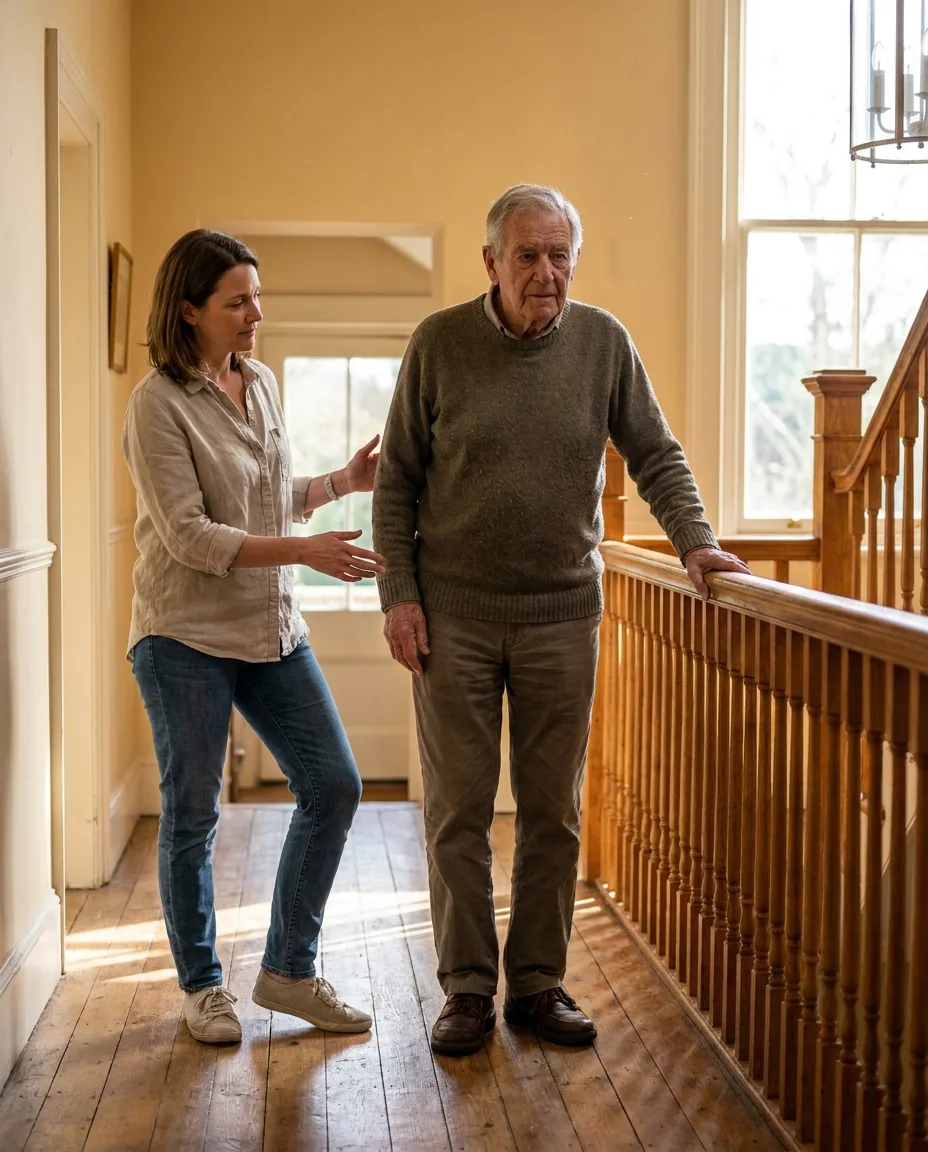
For care managers, discharge planners, elder-law and LTC professionals
A clear path from referral to appropriate support at home.
Home care in Connecticut and New Jersey; companion care only in New York. This page sets out what we can take, what we cannot, how the handoff runs, and who is accountable, so a referral to us does not become a risk to you.
What can Endurance Home Care accept as a referral?
Endurance Home Care accepts daily-living referrals in Connecticut and New Jersey: hourly, live-in, awake overnight, transitional, and one-to-one facility support. We confirm market coverage and scope before contacting the family, and we tell the referrer when we cannot help. In New York, we accept companion-care referrals only: company, meals, light household routine, accompaniment, transportation, and verbal everyday reminders. We do not provide skilled nursing, therapy, medication administration, or emergency response.
For the full operating boundary behind a referral, review the current service scope before sending a household’s details.
If you are a geriatric care manager
You are not making a referral so much as subcontracting part of a plan you authored and remain accountable for, and the thing you need in writing is not our availability. It is where our lane ends: who advises your client, who re-assesses, and what comes back to you from inside the house. How we work with geriatric care managers sets that out as a two-column table before you make a first referral.
Scope
What we can take, and what we cannot
Stated at the top rather than in a footnote, because scope creep is the failure mode that damages a referrer's judgement rather than ours.
The full-service list below applies in Connecticut and New Jersey. New York is companion care only and excludes hands-on personal care, live-in or overnight care, memory care, respite, facility support, hospital-transition care, and medication management.
Within scope
- Personal care: bathing, dressing, grooming, toileting, and transfers within a caregiver's training
- Mobility support and supervision around identified risks in the home
- Medication reminders, with the limits stated to the family in writing
- Meal preparation, homemaking, laundry, and household routine
- Companionship, activity, and engagement built around the person's own interests
- Transport to appointments, pharmacy, and community activity
- Hourly, live-in, awake overnight, and one-to-one support inside a facility
- Structured family communication and escalation to a named contact
Outside scope, referred on
- Skilled nursing of any kind, including wound care, injections, and catheter care
- Physical, occupational, or speech therapy
- Medication administration, dose adjustment, or regimen management
- Clinical assessment, diagnosis, triage, or medical advice
- Emergency response. We are not a substitute for 911 or a monitored alarm service
- Anything requiring a licensed clinician under Connecticut or New Jersey law
The handoff
Five steps, and you are told the outcome of every one
You send the referral
Phone or email, whichever is faster for you. We need the market, the care model you have in mind, the hours, and how the family prefers to be contacted. We do not need the clinical record.
- Who owns it
- You, and it takes about two minutes
- What you receive
- An acknowledgement naming the advisor who has it
We confirm scope and market before contacting anyone
If we cannot staff the town, cannot cover the hours, or the need is outside daily-living scope, you hear that from us first. You should never learn we could not help from your own client.
- Who owns it
- The care advisor for that market
- What you receive
- A yes, a no, or a specific caveat, back to you
We contact the family
On your terms and theirs. If you want to introduce us yourself, we wait. If you want us to lead, we lead and copy you on where it lands.
- Who owns it
- The care advisor
- What you receive
- Confirmation that contact was made, and by whom
Assessment, plan, and match
The same process any family gets. Where you are still involved, you receive the care plan summary with the family's permission rather than by default.
- Who owns it
- The care advisor and the Care Coordinator
- What you receive
- The written care plan, shared with consent
You are told how it went
Started, declined, referred on, or not proceeding. Including when the answer is unflattering to us. A referral partner who only hears about the wins cannot calibrate anything.
- Who owns it
- The care advisor
- What you receive
- A close-the-loop note, whatever the outcome
Make a referral
Phone is fastest. Email works too.
Please do not send clinical records. We do not need them, and we would rather not hold them.
Client line
(203) 936-6847New Jersey (973) 315-5323Ask for the care advisor covering the client's town.
Written referral
Use the contact page and mark it as a professional referral. Include the market, the hours, and the family's preferred contact.
Credentials and memberships
 Accredited ByBBB Accredited Business, A ratingBetter Business Bureau · view the source
 Corporate PartnerALCA Silver Corporate PartnerAging Life Care Association · view the source
- Licensed InHomemaker-Companion Agency registration HCA.0002450Connecticut Department of Consumer Protection · view the source
- Licensed InHealth Care Service Firm registration HP0435100New Jersey Division of Consumer Affairs · view the source
Endurance Home Health
Connecticut DPH License 9915786
Separate Connecticut home-health credential issued by Connecticut Department of Public Health.
Questions referrers ask
What information do you need to accept a referral?
The town or ZIP, the care model and hours you have in mind, the family's preferred contact, and any constraint we should know about before we call. We do not need or want the clinical record, and we would rather you did not send one.
Will you tell me if you cannot take it?
Yes, and before we contact the family rather than after. Coverage and staffing are the two most common reasons, and both are quicker to check than to explain later.
Can you work alongside a home health or hospice provider?
Yes. Daily-Living support sitting alongside a clinical plan is one of the most common arrangements we run. We coordinate around the clinical schedule; we do not direct it, and we do not represent an affiliation we do not have.
Do you pay for referrals?
No. There is no fee, no commission, and nothing that would need disclosing to your client.
How do you handle client information?
The referral is handled by the named advisor for that market. The family's information is not shared back to you without their permission, even though you sent them, and the care plan goes to you only with their consent.