

Start here
You do not have to know the right word for it.
Most people arrive here knowing what has changed, not what to call it. Start from the situation. Home care in Connecticut and New Jersey; companion care only in New York.
How do I work out what kind of home care we need?
Start with what changed rather than with a service name. Describe the last difficult week: which hours were hardest, what was missed, and who is covering it now. From that, a care advisor can explain the available options. Hourly support, live-in care, awake overnight cover, and transitional plans are available in Connecticut and New Jersey. In New York, Endurance provides companion care only.
Home care in Connecticut and New Jersey; companion care only in New York. A situation may be described here even when the corresponding service is not available in New York; the market boundary always controls the recommendation.
What changed?
- Something just happenedA fall, a hospital call, a wandering incident, or a night that went badly wrong. You need to know what is possible this week.
 See what can start quickly
 - They are coming home from hospitalDischarge is set, the paperwork is thick, and nobody has explained who does what once the front door closes.
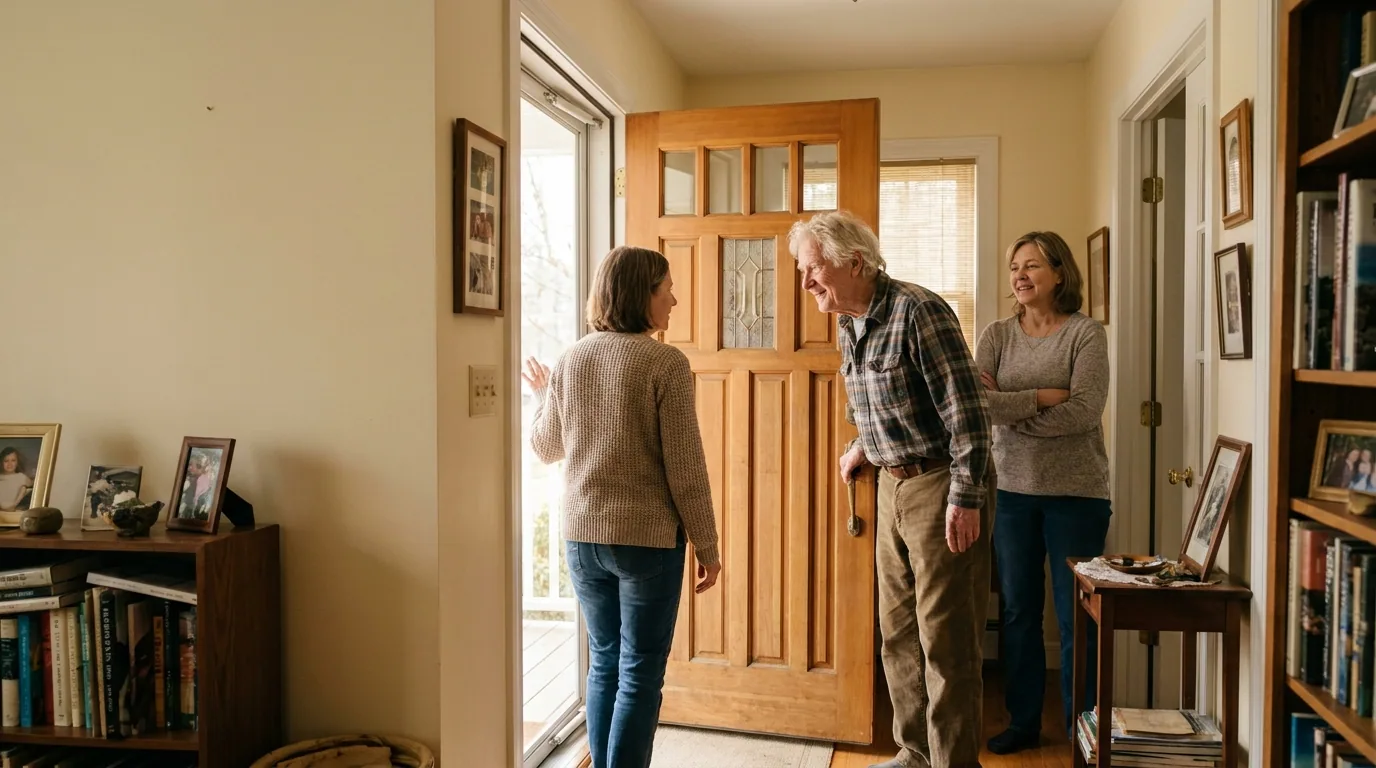 The first 72 hours at home
 - Memory is changingRepeated questions, missed meals, evenings that get harder, or help that gets refused. You want support that does not take over.
 How memory support works at home
 - The nights are the problemGetting up, wandering, calling out, or simply the fear of what happens at three in the morning when nobody is awake.
 Live-in care or awake overnight care
 - I cannot keep doing this aloneYou are the spouse, the daughter, the son. It has been months. You need hours back without handing the whole thing over.
 Respite and regular hours
 - Nothing is wrong yet, and I want to be readyYou can see where this is going and you would rather choose while there are still choices to make.
 Plan before a crisis
None of these is a form. Each one goes to a page that explains the care, its limits, and what it costs to run. Nothing asks for your details until you decide to give them.
What twenty-four hours of care looks like
Three of these get called round the clock care. Only one of them means somebody is awake at three in the morning, and the difference is the most expensive misunderstanding in this industry.
Hourly care
Chosen blocks. The gaps are covered by the family, or by nobody.
Someone present and awake from 8am to 11am. Someone present and awake from 5pm to 8pm.Any hours the household picks. Drawn here as a morning and an evening visit, which is an example rather than a schedule.
Live-in care
Someone in the house all day and all night, sleeping at night.
Someone present and asleep from midnight to 7am. Someone present and awake from 7am to 10pm. Someone present and asleep from 10pm to midnight.The caregiver sleeps, and can be woken when something needs doing. The arrangement assumes an uninterrupted night and stops working if that is broken repeatedly.
Awake 24 hour care
A rotating team, awake through every shift. Nobody sleeps on duty.
Someone present and awake from midnight to midnight.Typically two twelve hour or three eight hour shifts, so somebody is always both present and awake. No spare bedroom is needed because nobody sleeps in the house.
- Someone here and awake
- Someone here, asleep
- Nobody here
Mixed arrangements are common and often the sensible answer: awake cover on the nights that are hardest, hourly support in the day. Live-in care compared with awake 24 hour care goes through it properly, and what each one costs is on the paying for care page.
If none of those fit
Describe it in your own words instead
Situations rarely arrive as clean categories. If yours does not match a tile, the phone is the faster route and there is a person on the other end of it.
Call (203) 936-6847 for Connecticut or New York, or (973) 315-5323 for New Jersey. Neither is an emergency line. If someone is in immediate danger, call 911.
The honest part
Home first does not mean home at any cost
When home may not be the right setting
- A home that cannot be made safe for the level of mobility support required, where the modification cost or the layout genuinely outweighs the benefit of staying.
- A medical situation where minutes matter and someone needs to be able to respond clinically, not observe and call.
- Isolation that a caregiver cannot solve, where a residential community would genuinely give someone more life rather than less.
If any of these describes your situation, say so on the call. A responsible advisor should tell you when a different setting fits better, and ours are asked to.
Common first questions
I do not know what kind of care we need. Where do I start?
Start with what changed rather than with a service name. Pick the situation above that sounds closest, or call and describe the last bad week. Working out which care model fits is our job, not yours, and it is the whole point of the first conversation.
Do I need a diagnosis before you can help?
No. We do not ask for one, we do not require one, and we are not qualified to make one. What we need to know is what the day looks like now, what has become hard, and who else is involved.
How quickly can care start?
It depends on the town, the hours, and the care model, and anyone who answers that question with a number before asking where you are is guessing. Tell us the ZIP code and the hours and we will tell you what is realistic.
What if home is not the right answer?
Then we should say so. Some situations need continuous clinical support, an environment that a private home cannot safely provide, or an emergency response we do not offer. A good advisor tells you that instead of selling you hours that will not hold.
More detail lives in the guidance library, and the care models are compared side by side on the care options page.