

Audio only, no cameras
Aging in Place Technology That Actually Helps
Built around one service that exists, not a catalogue of gadgets that might.
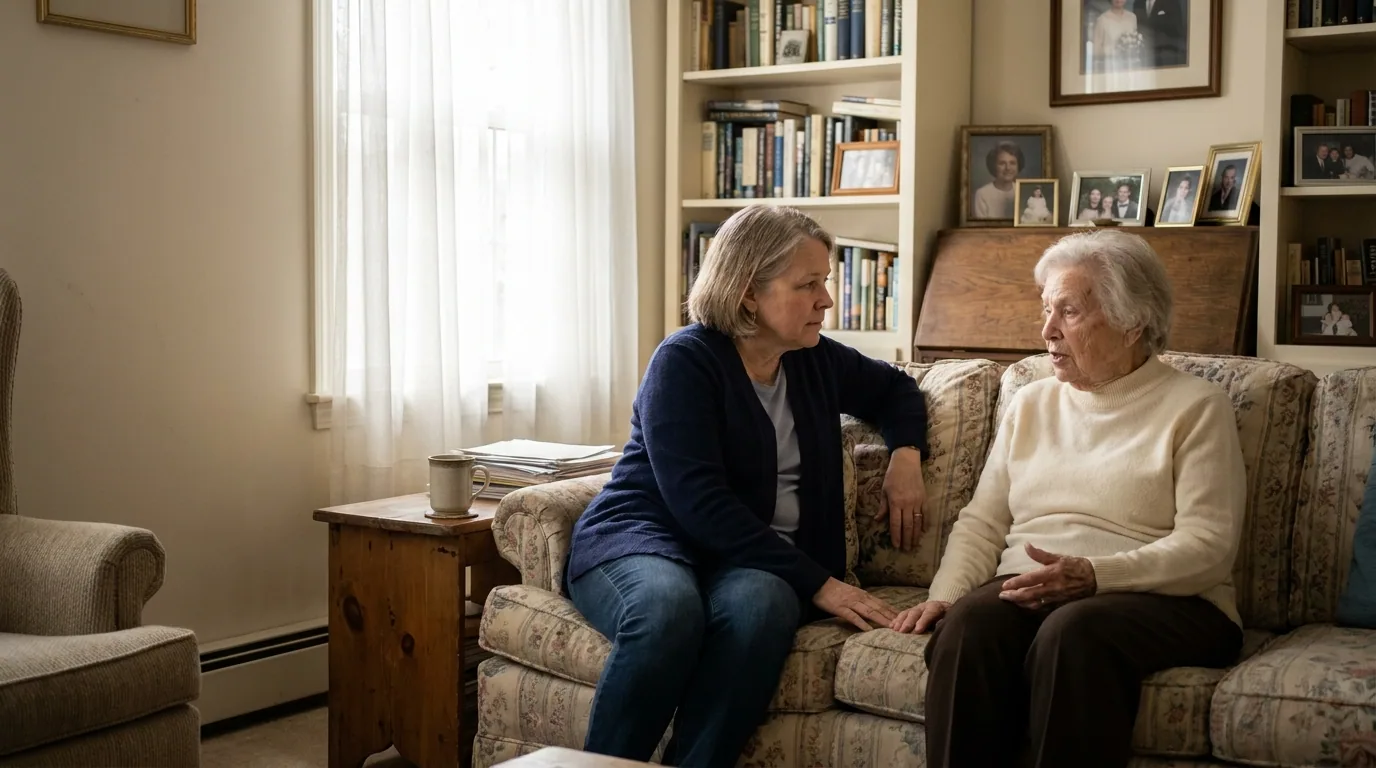
Endurance Technology Solutions, Endurance Home Care's 24/7 virtual care service built on 100% audio technology, is the working example this guide to aging in place technology is built around.
The whole useful stack
Call
A way to reach a person without finding a phone first.
Not a device that beeps in an empty room.
Hear
A way for someone to check in on the ordinary days between visits.
Not a camera pointed at a parent.
Reach
A team that answers the alert and responds promptly.
Not a notification landing in an app nobody has open.
Technology that helps is technology someone answers. A device that only beeps is not help.
Most technology sold for aging in place is sold as reassurance, and reassurance is not a capability. The list that earns its place in a house is short. Something that reaches a person when reaching one matters. Something that checks in on an ordinary day, so a harder day is noticed sooner. And something that says a dose is due at the hour it is due.
The National Institute on Aging puts that last one plainly: reminder systems, tying doses to meals or bedtime and using charts, calendars, or weekly pill boxes, help people take medicines on time. Nothing about that is futuristic. It is the same short list families arrive at anyway, usually after the expensive version has gone in a drawer.
The question keeps getting asked because the preference is nearly universal. AARP’s 2024 Home and Community Preferences Survey found that 75 percent of adults 50 and older wish to remain in their current homes as they age. What gets sold back is a catalogue of devices rather than an answer to the job. This page is the technology chapter of the aging in place family guide, and it is built around one working example instead.

What the working example actually does
Endurance Technology Solutions is our 24/7 virtual care service, and it is worth describing by its parts rather than its category, because the category is where this market does its exaggerating. Three parts, in the order a household meets them.
- Branch 01 / the install
It plugs in, and that is the installation
The install is plug and play, which matters more than it sounds like it should: the measure that never gets set up is not a measure. It runs on 100% audio technology, so there is no camera in the house and nothing pointed at anybody. For a parent who has already said no once to being watched, that sentence is usually the whole conversation.
- Branch 02 / the loop
The alert goes to people, not to an app
Coverage runs around the clock, and an alert goes to the Endurance team so we can respond promptly. That is the entire mechanism and we will not dress it up: it does not diagnose anything, it does not predict anything, and it is not a medical device. It shortens the distance between something happening and a person knowing. The service page for Endurance Technology Solutions carries the rest of the detail.
- Branch 03 / the additions
A plan somebody rereads
The care plan is reviewed on a customized monthly cadence rather than written once and filed. Reminders belong in this branch too, and they are their own subject: reminder systems that work are the ones a household actually keeps using.
Worth saying plainly, because it explains why this page exists at all: across the national franchise brands competing here, we have not found one marketing an audio-based virtual care layer or a 72 hour hospital to home transition program. Endurance Home Care provides care at home in Connecticut and New Jersey, with companion care only in New York. Skilled nursing, home health aides and physical therapy in Connecticut are provided by Endurance Home Health.

A device can raise its hand. It cannot cook dinner.
The failure families describe is rarely that the technology broke. It is that the technology was bought instead of help, and then a Tuesday arrived that needed hands. So the arrangement that holds is layered rather than substituted, and the layers do different work.
Audio check-ins and alerts run around the clock, so the gap between a problem and somebody knowing about it is shorter than a phone call nobody made.
A caregiver cooks, drives, tidies, keeps company, and reminds. Those are hands and hours, and no amount of audio substitutes for either.
Read in that order the spending decision gets easier. Caregiver hours buy the things a house needs done. The audio layer buys a shorter wait on the hours nobody is scheduled. Neither one is the other, and a household that starts by choosing between them has been handed the wrong question. The same logic runs through fall prevention at home, where the useful measures are the ordinary ones repeated, not the clever one installed.

The window right after a discharge
The window
Endurance Homebound is our hospital to home transition program, built around the first 72 hours back in the house after a discharge.
What the audio layer adds
Round the clock audio coverage between caregiver shifts during that window, with alerts reaching the Endurance team so a person can respond.
How to start
One call to the Client Support Line, (203) 936-6847, or a free consultation booked online. Ask about both programs on the same call.
The discharge week is the one where a household is asked to run a new routine on no sleep, which is exactly when a device that only beeps becomes another thing to manage. Pairing the two is the design: scheduled hours for the work that needs hands, audio coverage for the hours in between, and one number to call when the plan needs changing. It is daily-living support throughout, and questions about the recovery itself belong with the discharging clinicians.
Connecticut License HCA.0002450 · New Jersey License HP0435100 · Connecticut DPH License 9915786 (Endurance Home Health).

Questions families ask
What technology helps seniors age in place?
The useful stack is small: a way to call for help, a way someone checks in, and reminders that fire on time. Endurance Home Care's version is Endurance Technology Solutions, 24/7 virtual care built on 100% audio technology with plug-and-play install, layered under human caregivers rather than replacing them.
What is Endurance Technology Solutions?
Endurance Technology Solutions, ETS, is Endurance Home Care's 24/7 virtual care service. It uses 100% audio technology, installs plug-and-play in the home, and sends alerts to the Endurance team so a person can respond promptly. It pairs with in-person care and customized monthly assessments, and it is daily-living support.
Does technology replace a caregiver for an elderly person living alone?
No. Audio check-ins and alerts shorten the time between a problem and a response; they do not cook, steady a hand on the stairs, or keep someone company. The working pattern is layered: ETS between visits, caregiver hours for hands-on tasks. As one Endurance family put it, whenever we need anything they have a solution.
Can ETS help right after a hospital discharge?
Yes, that pairing is the design. Endurance Homebound is the hospital-to-home transition program built around the first 72 hours back home after discharge, and ETS adds round-the-clock audio coverage between caregiver shifts during that window. Ask about both on the consultation call, (203) 936-6847.

The register only works if somebody is on duty.
Home care and 24/7 audio check-ins across Fairfield and New Haven counties, Connecticut, from an agency licensed in Connecticut and New Jersey.