
Dementia care at home
Dementia Wandering and How to Prevent It
Six in ten will wander at least once, so prevention is a household routine and not a one-time fix.
Ranges from one door
- First minutes
- 1.5 miles
- 15 minutes
Six in 10 people living with dementia will wander at least once, and many do so repeatedly, which makes prevention a household routine rather than a one-time fix.
Six in ten is not a warning about a rare event. It is the ordinary arithmetic of the condition.
Most families meet that figure after the first incident rather than before it, which is the wrong order and the reason this page leads with it. The Alzheimer’s Association reports that six in ten people living with dementia will wander at least once, and that many of them do so repeatedly. Repeatedly is the word that changes what a useful response looks like.
A single fix is aimed at a single event. One lock, one conversation, one promise to stay put. What the number describes is closer to a standing condition of the household, and it asks for the same kind of answer: something that runs on ordinary days rather than a measure installed after a bad one.
Nothing here removes the possibility, and we are not going to write as though it could. What follows is what the Association recommends, stated plainly, and then the question this page exists to answer: where a person in the house during the day actually fits. It sits inside our wider guide to dementia care at home.

What actually reduces it
The instinct is to start at the door, because the door is where the event becomes visible. The Alzheimer’s Association puts most of its weight earlier than that, on the hours before anybody reaches for a handle. Wandering tends to answer something: an errand that used to happen at four o’clock, a shift that used to start, a walk that used to be taken. An empty afternoon leaves that impulse with nothing else to land on.
So the useful picture is a branch rather than a barrier. Three places to work, in the order they actually matter.
- Branch 01 / the day
Fill the hours first
The Association’s recommendation is to provide opportunities for the person living with dementia to engage in structured, meaningful activities throughout the day. Structured and meaningful are both doing work in that sentence. A television left on is neither. A day with shape in it, cooking, folding, a walk taken with someone rather than alone, is the measure that reaches the impulse instead of the exit.
- Branch 02 / the door
Move the lock, not just the rules
Placement is the recommendation, not hardware. Deadbolts placed out of the line of sight, either high or low on exterior doors, are a recommended measure precisely because they sit outside the usual visual scan. It is one layer and it is meant to be one layer, paired with the day rather than trusted instead of it. The room by room version of this, and the rest of the house, is dementia proofing the home.
- Branch 03 / the hour
If it clusters late in the day
Some households find the restlessness arrives at roughly the same hour, as the light goes. That pattern has a name and a page of its own, with its own sources and its own list of what helps, so we send you there rather than summarize it badly here: what to do when sundowning starts.
Fifteen minutes is the whole decision. After that, it is a phone call.
The minutes after somebody is found missing are the minutes least suited to deciding anything, which is why the decision is better made now, in daylight, with nobody missing. The Alzheimer’s Association gives it a shape simple enough to hold onto under pressure.
Search the immediate area, and search it in an organized way rather than in three directions at once. This is the window an organized search is actually for.
Many individuals with dementia who wander are found within 1.5 miles of where they disappeared. The circle you are looking inside is smaller than panic assumes.
If the person is not found within 15 minutes, call 911 and file a missing person report. The Alzheimer's Association puts no condition on that instruction, and neither do we.
Families hesitate on the third band, because calling 911 feels like an escalation and because the person is probably around the corner. The fifteen minute rule exists to take that judgment away from you on the worst afternoon of the year. Make the call, keep searching, and let being wrong be the good outcome.
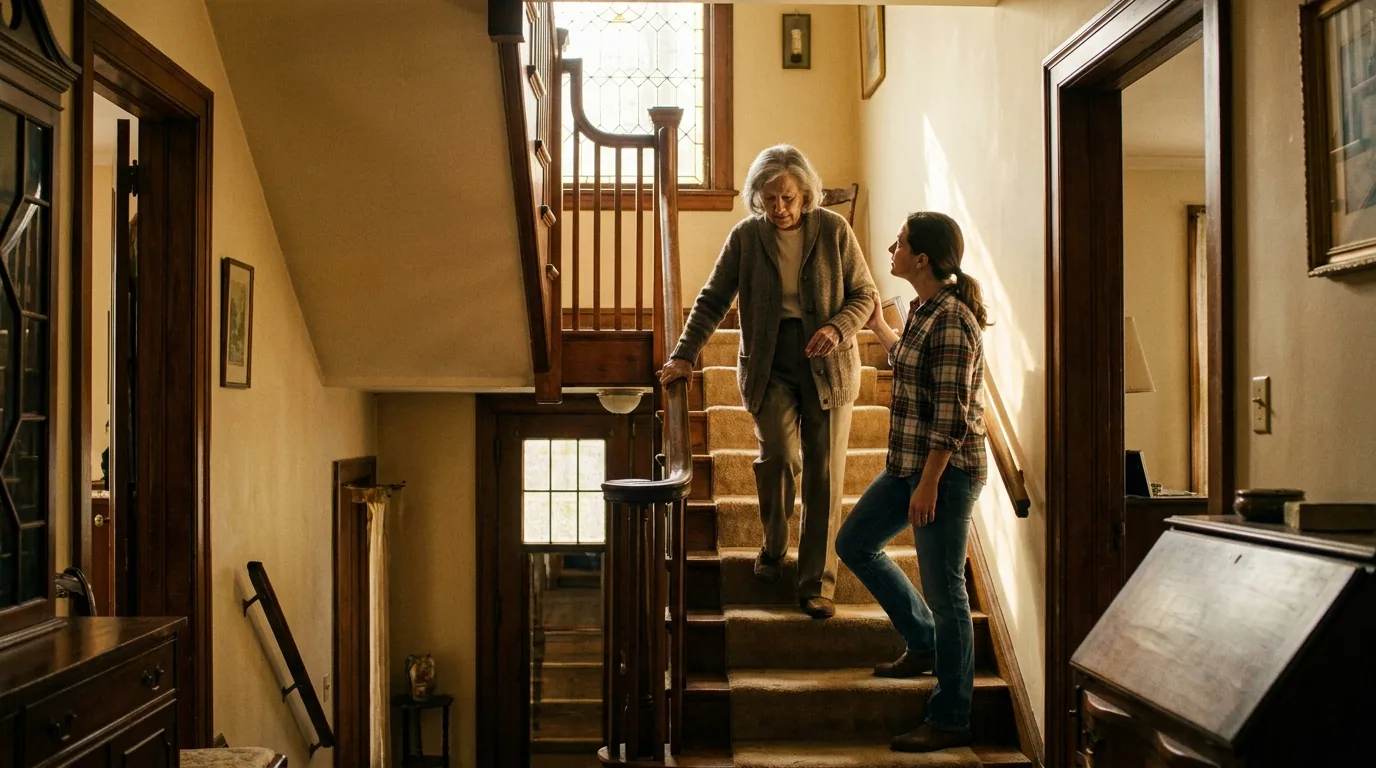
Where a caregiver fits, and what that does not mean
Safety supervision is one of the daily-living services Endurance Home Care provides in the home, and on this subject the honest description of it is narrow. A caregiver is a person in the house for the hours you schedule. Those are hours that would otherwise be unstructured, and filling them with company, cooking, errands, and something worth doing is the same measure the Association recommends, carried out by somebody who came to do it.
What it is not is a guarantee, and we will not sell it as one. Supervision does not prevent wandering. Nobody is watching a monitor. Caregivers support, accompany, remind, coordinate, and supervise. They do not diagnose, treat, or assess anyone, and questions about the condition itself belong with the person’s doctor.
Households that want a second layer can add ETS, our optional check-in service: 24/7 audio check-ins and alerting that notify the Endurance team so we can respond promptly. It is a way of reaching a person faster. It is not a medical device, it does not watch for changes in anyone, and it makes no claim about what it can catch.
For what a standing schedule looks like when memory is the reason for the call, see in home dementia care.
Endurance Home Care provides care at home in Connecticut and New Jersey, with companion care only in New York. Skilled nursing, home health aides and physical therapy in Connecticut are provided by Endurance Home Health.

Questions families ask
dementia wandering
Six in 10 people living with dementia will wander at least once, and many do so repeatedly. Prevention works best through the day rather than at the door: structured, meaningful activity reduces the impulse, and deadbolts placed out of the line of sight, high or low on exterior doors, slow an unplanned exit. If someone has wandered and is not found within 15 minutes, call 911 to file a missing person report.
How far do people usually go?
Many individuals with dementia who wander are found within 1.5 miles of where they disappeared, which is why an organized search of the immediate area matters in the first minutes. That does not replace calling 911: the Alzheimer's Association advises filing a missing person report if the person is not found within 15 minutes.
Do door locks actually help?
Placement is the point. Deadbolts installed out of the line of sight, either high or low on exterior doors, are a recommended measure because they fall outside the usual visual scan. They are one layer, paired with daytime activity and supervision rather than relied on alone.
Can a caregiver reduce the risk during the day?
Yes, largely by filling the hours that would otherwise be unstructured. Providing opportunities for structured, meaningful activity throughout the day is a recommended approach to preventing wandering, and safety supervision is one of the daily-living services Endurance provides in the home.
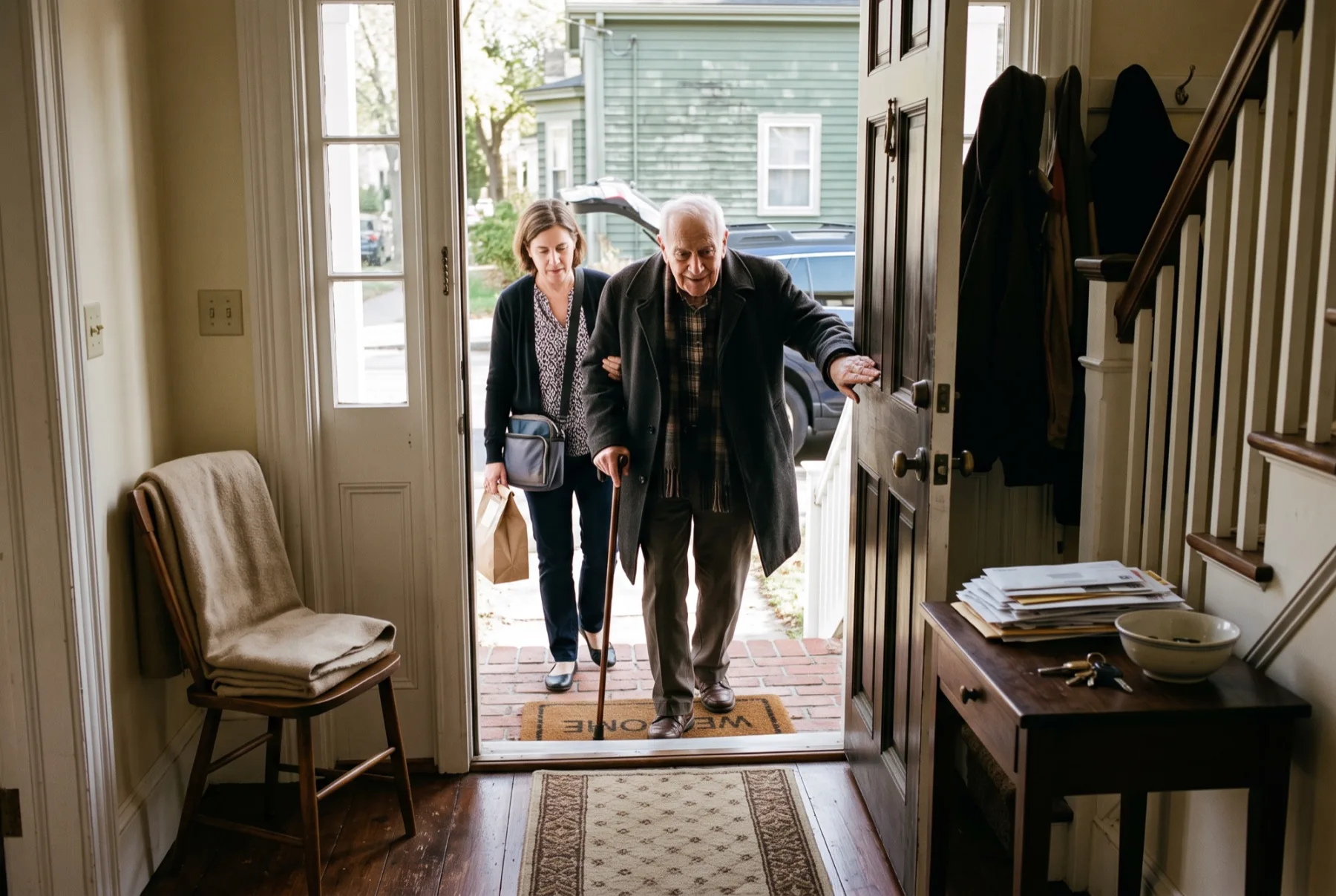
The circle is smaller than it feels at the door.
Home care across Fairfield and New Haven counties, Connecticut, from an agency licensed by the state.