
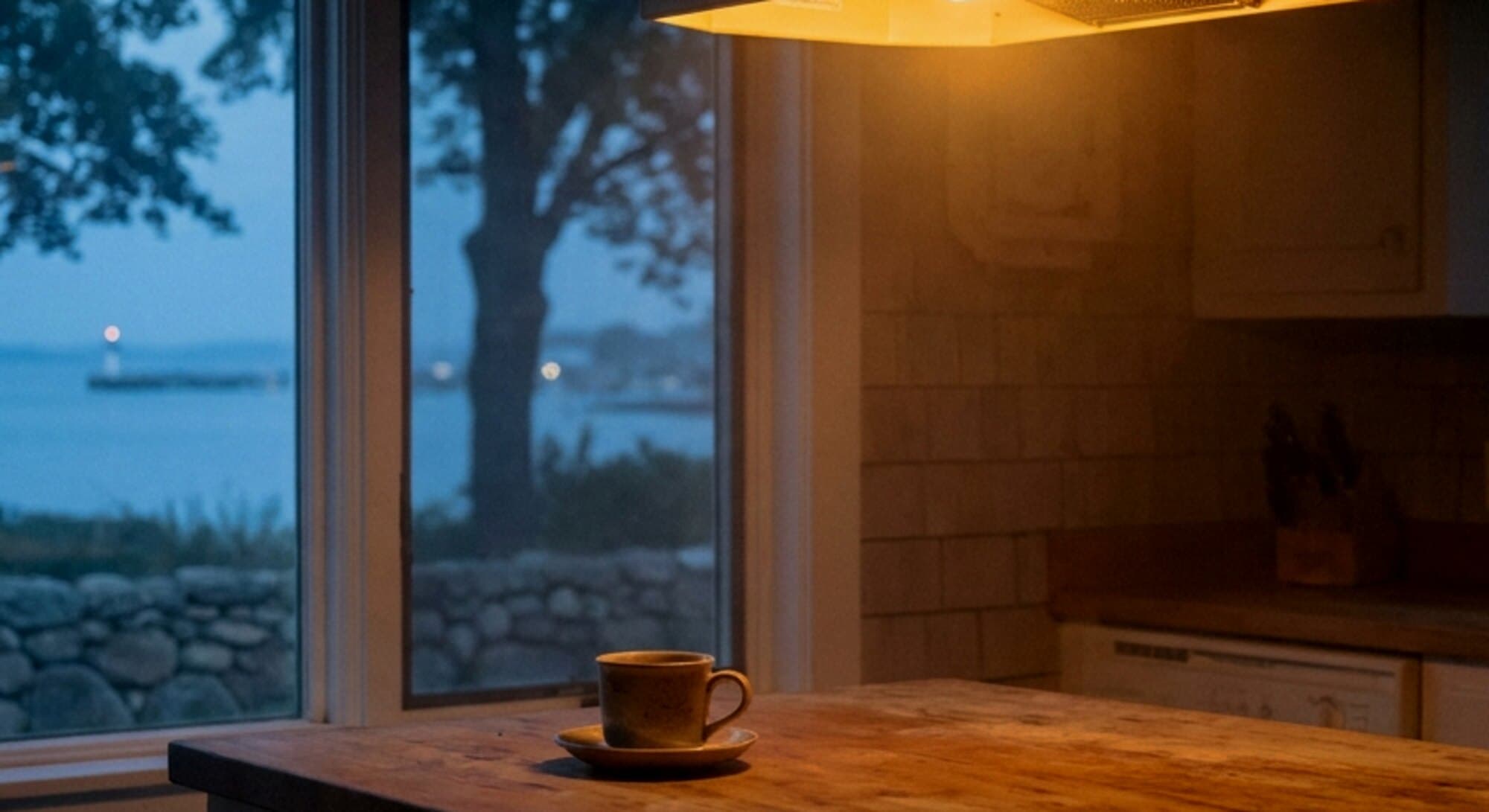
Lighting first
Dementia Proofing the Home
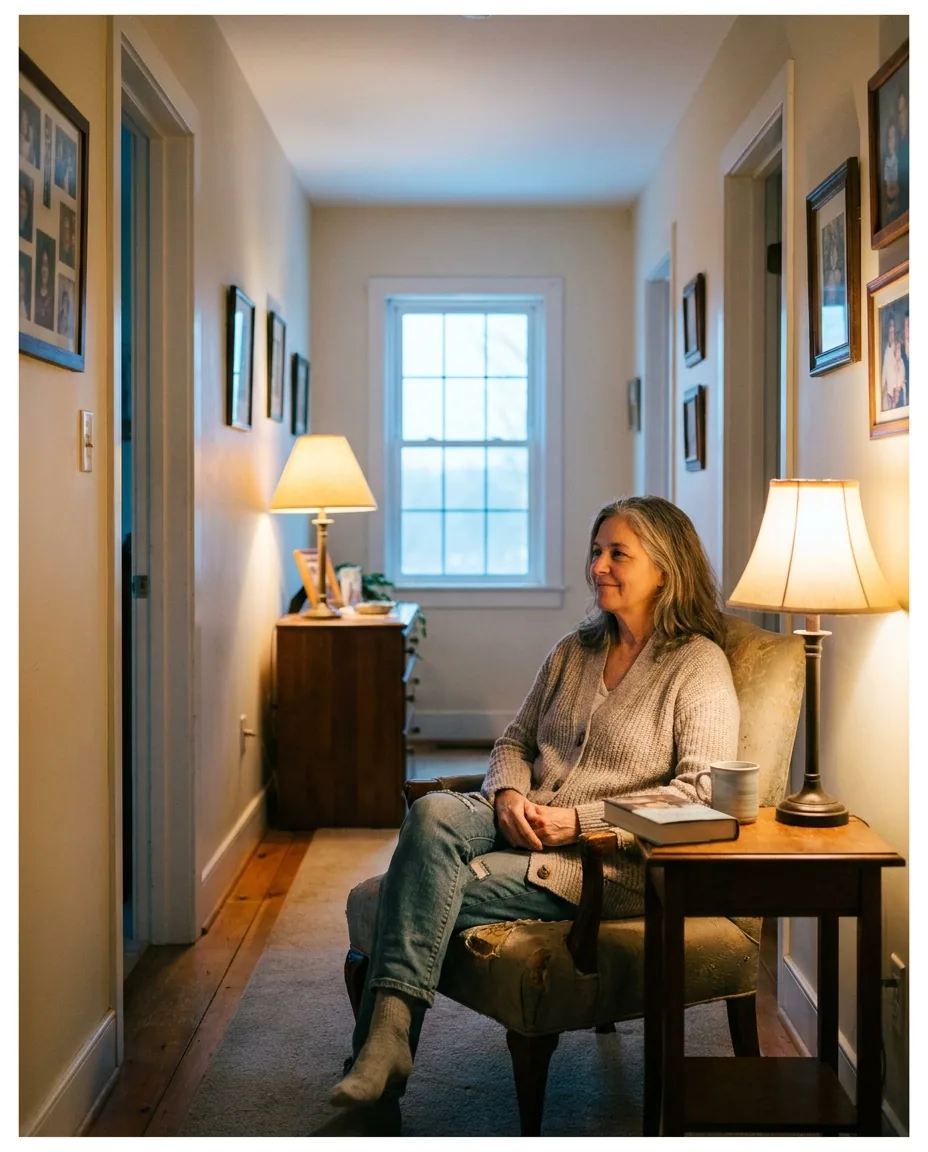
Start with the light. More rooms get safer from a brighter hallway than from anything you can buy.
Tonight's rounds
- LAMP
- FLOOR
- DOOR
- HAND
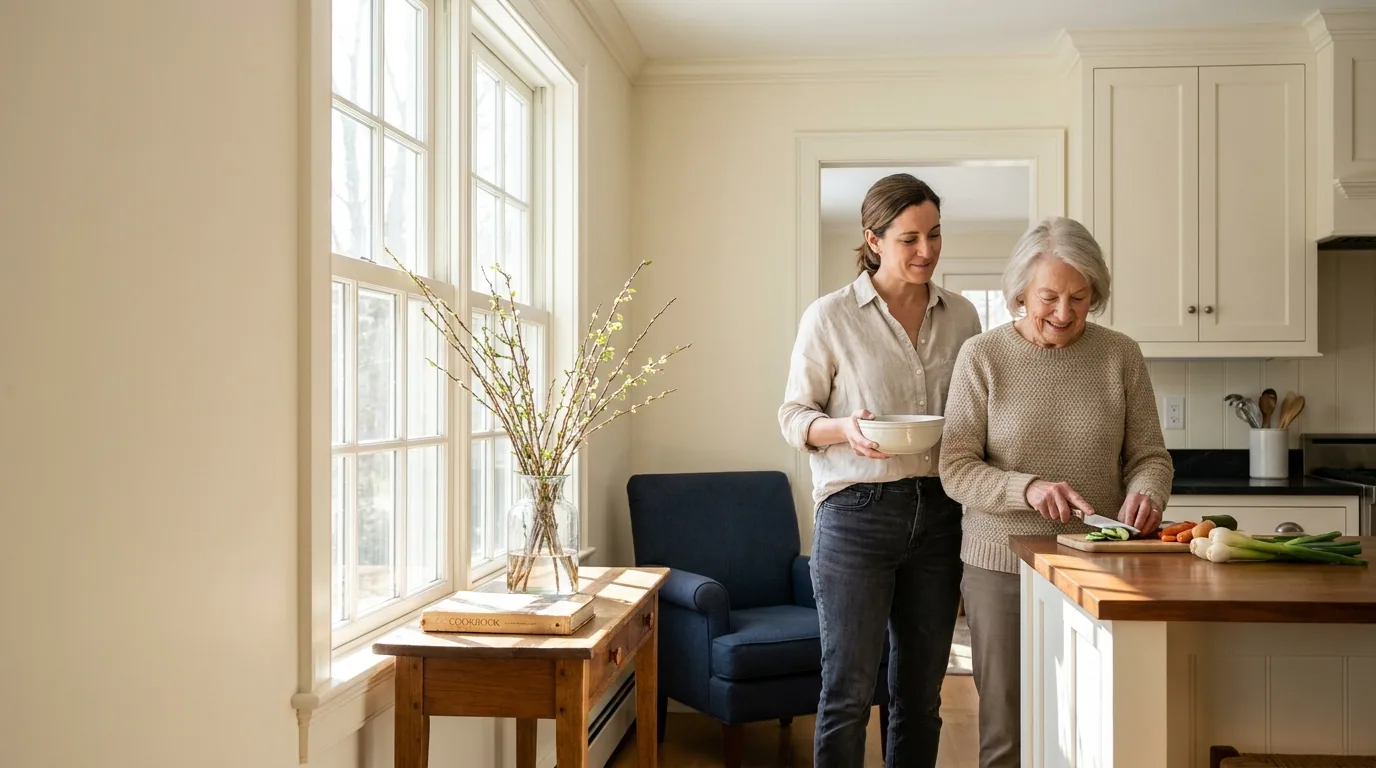
Keeping walkways and rooms well lit matters in dementia home safety because changes in levels of light can be disorienting, which makes lighting the first thing to fix rather than the last.
Why the light is round one
A lamplighter never argued about which street mattered most. He walked the sheet in order and lit what was printed on it. Dementia proofing gets easier the same way, once you stop working room by room and start working by effect. Light is round one because light travels. A brighter hallway reaches the stair, the bathroom door and the two in the morning walk to the kitchen at once, and none of those has to be its own project.
The Alzheimer's Association states the guidance plainly: keep walkways and rooms well lit, because changes in levels of light can be disorienting. The word carrying the weight there is changes. A bright kitchen beside an unlit hall is a change. A lamp at one end of a landing and nothing at the other is a change. So is a window that floods a room at four in the afternoon and gives it back an hour later.
That is why this page runs in the order it does rather than by floor plan. The first three fixes are all one round, and none of them requires a contractor. For the wider picture of what changes as dementia progresses at home, start with dementia care at home.
Walk the round after dark
Do the walkthrough at the hour the house is actually used, not at noon. A dim stretch only exists at the hour it exists, and a daytime pass will not show you one of them.
Even it out rather than only adding
Matching the light between two connected rooms is different work from making one room brighter. It is the step between rooms that the guidance is pointing at.
Light the whole route, end to end
Bed to bathroom, chair to kitchen, back door to car. A lit route with one unlit segment in the middle of it is still an unlit route.
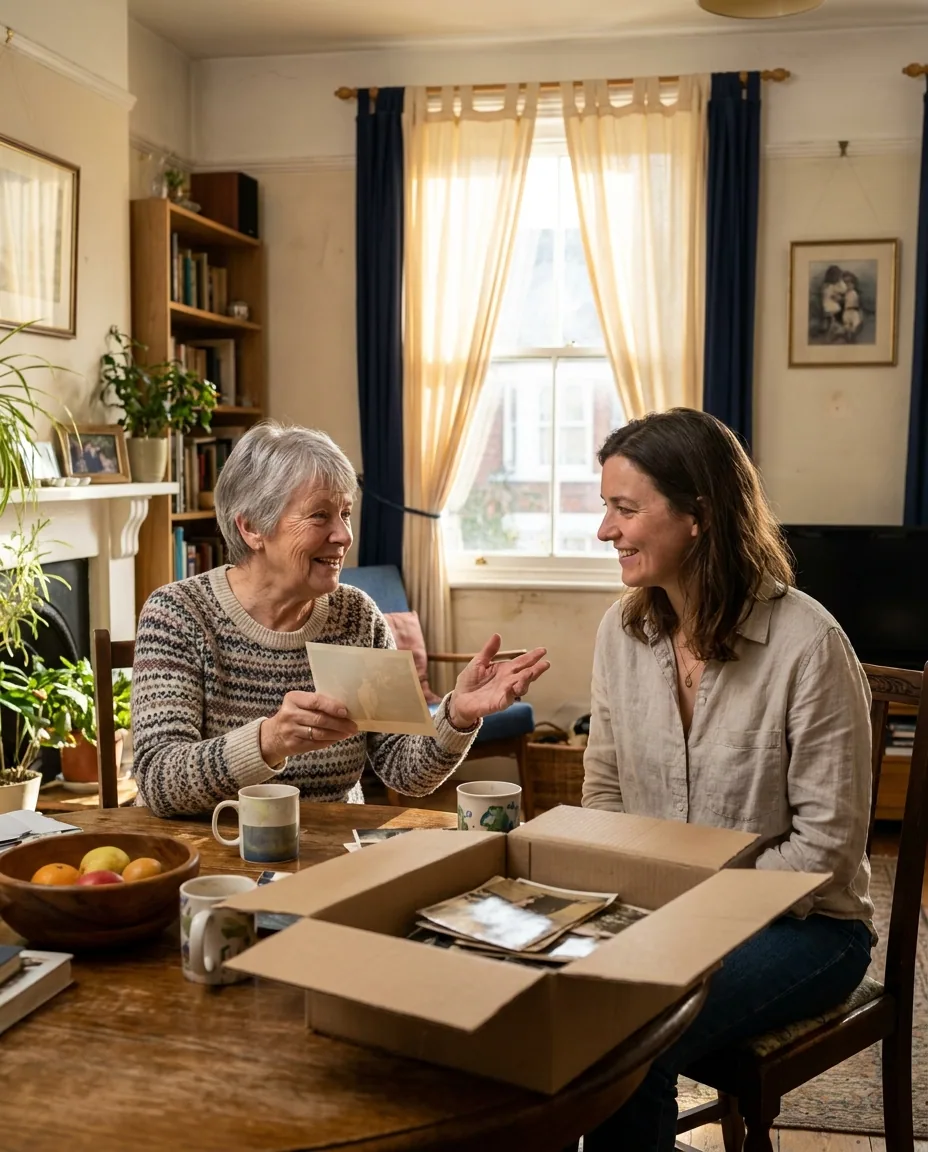
Round two, 04 to 06, floor
The floor is round two
Once the light is even, the floor is what is left to walk on. The Alzheimer's Association guidance here is short enough to keep in your head: remove throw rugs, extension cords and excessive clutter to take the tripping hazards out of the route. Three nouns, and every one of them is already in the house.
The reason this round is worth doing deliberately is that all three are furnishings first and obstacles second. A rug was chosen. A cord goes to the lamp somebody reads by. The pile on the hall chair is the household running normally. None of them looks like a hazard while you are standing still, which is exactly why a slow, seated look at the floor finds more than a quick walk through it does.
Work the same routes you lit in round one, in the same order, and read the floor as one continuous surface rather than as a set of rooms. If you want the general version of this for any older adult rather than the dementia specific one, the home safety checklist for seniors covers the rest of the house in the same plain order.
Take the rugs out of the routes
Start with the runs you just lit rather than with the whole house. A rug that nobody walks on is a different question from the one at the foot of the bed.
Get the cords off the walking line
Every cord that crosses a route is worth rerouting behind furniture, which usually means moving the lamp rather than the cord.
Clear the collecting spots
Clutter gathers in the same three or four places in any house. Clearing those spots weekly holds better than one large clear out that quietly refills.
A lock in the middle of the door is a lock in the middle of the visual scan.
Round three is doors, and it is the one families tend to shop for rather than think through. The Alzheimer's Association guidance is about placement before it is about hardware: install locks out of sight, with a latch or deadbolt either above or below eye level on all doors. Not a better lock. The same lock, higher or lower.
That is a useful thing to know before spending anything, because the expensive version of this round and the cheap version of it are frequently the same round. Height is the variable the guidance names. It also says all doors rather than the front door, which is worth reading twice in a house with a side entrance, a basement stair and a slider onto the deck.
Take this as one layer rather than as a solution, and pair it with the daytime structure that sits underneath it. The full picture of that, including what the association recommends beyond hardware, is on dementia wandering and how to prevent it.
Above or below eye level
The recommendation is placement out of the usual line of sight, not a heavier mechanism.
All the doors, not the front one
Side entrance, basement stair, garage, slider. The guidance says all doors.
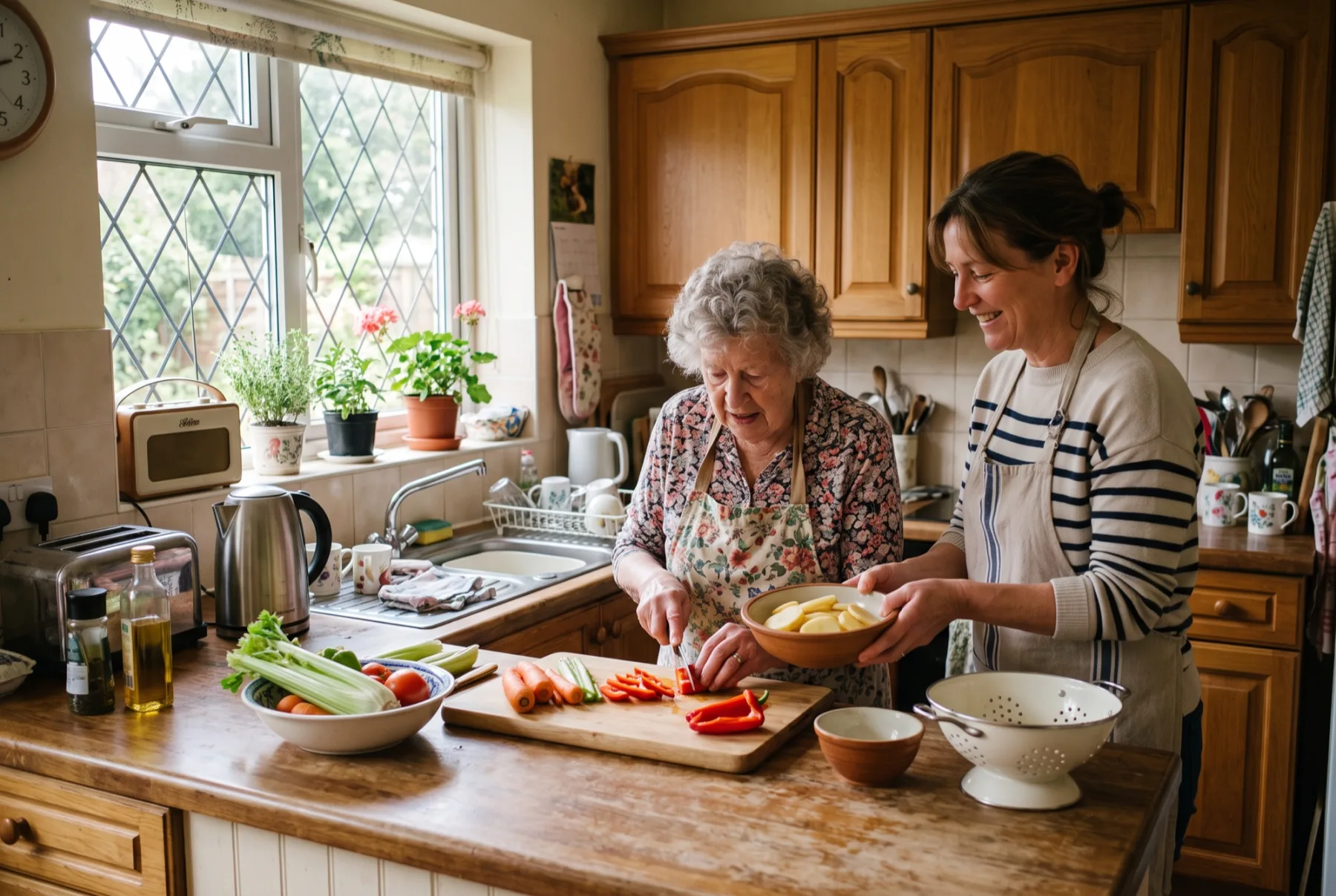
Round four, 09, hand
The part of the round a person walks
Rounds one through three are things you do once and check on. The fourth is not a purchase. It is the hour of the day somebody is in the house, which is the layer every piece of hardware above is sitting on top of.
people living with dementia will wander at least once, according to the Alzheimer's Association. It is the reason the door round exists, and the reason the door round is not the whole answer.
Keep somebody on the round
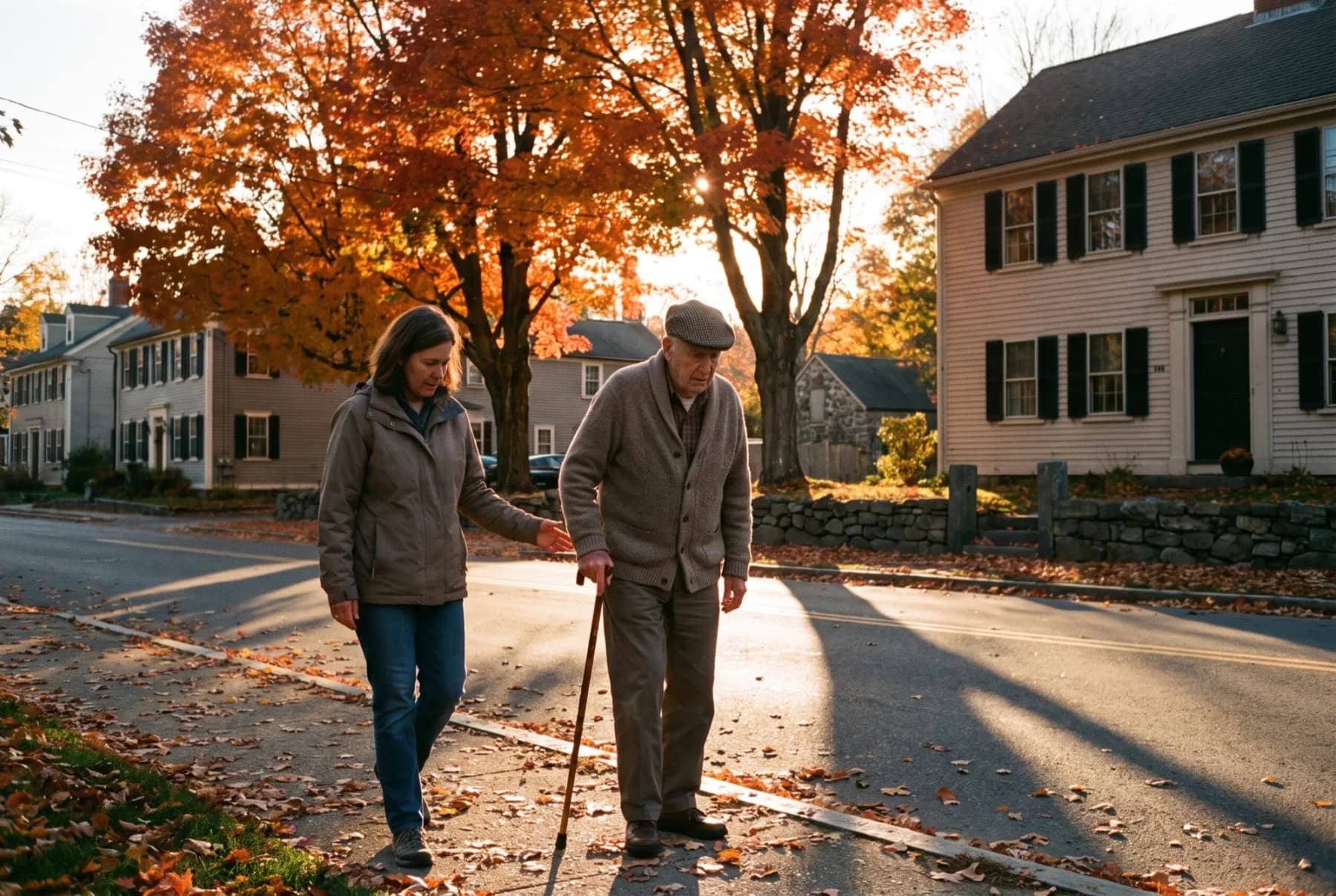
Safety Supervision is one of the named services Endurance Home Care provides. A caregiver is in the house on a schedule you set, accompanying and supervising through the hours the household finds hardest.
What a person notices that a fitting does not
A deadbolt holds at whatever height it was installed at. It does not notice that the coat came off the hook at four o'clock, or that the same question about getting home has now been asked three times, or that the hallway bulb went out on Tuesday and round one quietly came undone.
That is the whole argument for keeping hardware as one layer. The fittings hold a position. A person keeps walking the sheet.
What this is not
Endurance Home Care is daily-living. Caregivers support, remind, accompany, coordinate and supervise. They do not diagnose, treat or assess anyone, and nothing on this page is a substitute for talking to a clinician about what you are seeing.
Endurance Home Care provides care at home in Connecticut and New Jersey, with companion care only in New York. Skilled nursing, home health aides and physical therapy in Connecticut are provided by Endurance Home Health.
If the round needs a second pair of hands
Memory support at home serves Connecticut and New Jersey; New York service is companion care only. It comes from an agency licensed by the state as HCA.0002450. For what a standing schedule looks like, see in home dementia care.
Client support (203) 936-6847
Questions families ask
dementia proofing home
Start with light: keeping walkways and rooms well lit matters because changes in light levels can be disorienting. Then clear the floor by removing throw rugs, extension cords, and excessive clutter that create tripping hazards. For exits, install locks out of sight, with a latch or deadbolt either above or below eye level on all doors. Pair the changes with supervision rather than relying on hardware alone.
Which single change helps most?
Lighting, in most homes. Keeping walkways and rooms well lit matters because changes in levels of light can be disorienting, and the same fix reduces both fall risk and the evening confusion that shadows can trigger.
Are throw rugs really a problem?
Yes. Removing throw rugs, extension cords, and excessive clutter reduces tripping hazards in the home of a person living with dementia. They are also easy to miss during a walkthrough because they read as decor rather than as obstacles.
Where should door locks go?
Out of sight. The recommendation is a latch or deadbolt either above or below eye level on all doors, since hardware in the usual visual scan is more likely to be used. Treat it as one layer alongside daytime structure and supervision.
Every lamp on the sheet, every night of the month.
Home care across Fairfield and New Haven counties, Connecticut, from an agency licensed by the state.