

Loneliness in Elderly Adults: What Families Should Know
When we ask families what changed, the answer is usually that nobody comes by anymore.
A quarter mile of the same street
- Name the empty part of the week
- Put one shared thing in it
- Make it the same day each week
- Keep it going when it gets dull

Loneliness in elderly adults is a health risk, not just a feeling: the 2023 US Surgeon General advisory ties poor social connection to a 29% higher risk of heart disease and a 32% higher risk of stroke.
What the advisory actually reports
The 2023 advisory from the US Surgeon General on social connection reports that loneliness raises the risk of premature death by 26%, and that social isolation raises it by 29%. It puts the scale of that in a comparison most people remember afterward: lacking social connection can carry a risk to health as large as smoking up to 15 cigarettes a day. For older adults specifically, the same advisory links chronic loneliness and social isolation to roughly 50% higher risk of developing dementia.
Those figures belong to the advisory and to the population studies behind it, not to any one person at any one kitchen table. We repeat them here for one narrow reason. Families tend to file an empty week under sadness, which is something you wait out, when the research files it closer to blood pressure, which is something you look at. That change of category is the whole point of this page.
Source: Our Epidemic of Loneliness and Isolation, US Surgeon General advisory, 2023
- Loneliness: 26% higher risk of premature death
- Social isolation: 29% higher risk of premature death
- Poor social connection: 29% higher heart disease risk
- Poor social connection: 32% higher stroke risk

Why the risk climbs after 65
National Institute on Aging, on why older adults carry higher isolation risk. Loneliness and social isolation, tips for staying connected
The National Institute on Aging points at the ordinary machinery of getting older rather than at anything a person did wrong. Hearing loss makes a crowded room not worth the effort. Vision loss takes the evening drive. Memory changes make the phone call harder to start. Disability and trouble getting around shorten the list of places a week can happen in. And then, steadily, family and friends are lost.
Each of those on its own is survivable and most families absorb them one at a time. The difficulty is that they stack. A person can pass every individual test, still drive, still cook, still hold a conversation, and have almost nobody left to have one with. That is why the change is so easy to miss from the outside, and why it usually shows up as something else first: a quieter phone, a fridge that keeps the same food in it, a parent who says they are fine and means it.
If you are trying to work out whether what you are seeing is ordinary aging or something that needs help, the same cluster of changes shows up in the signs an elderly parent needs help at home. For the plain definition of the service families usually reach for first, start with what companion care is and covers.
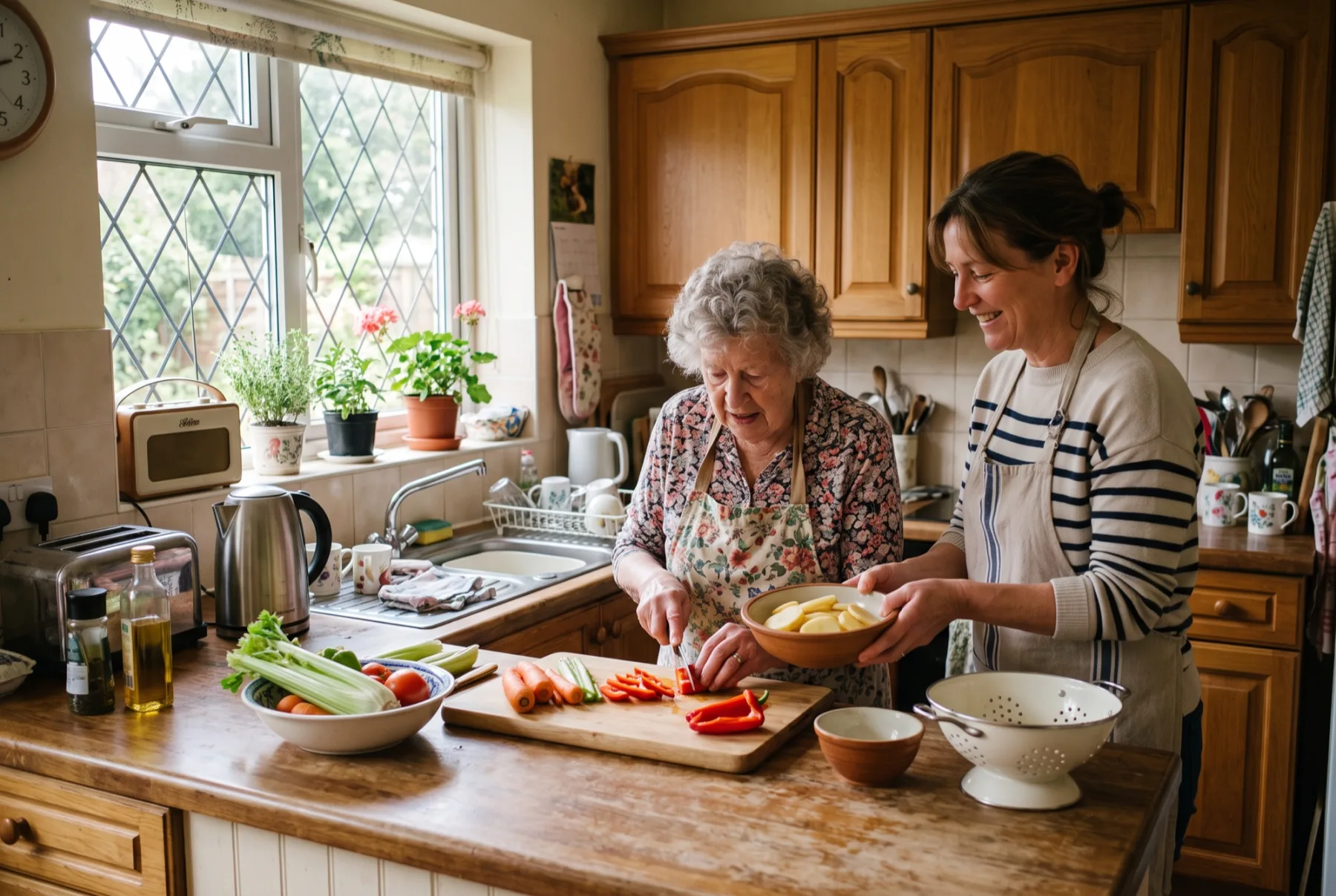
What helps is not company in general. It is one shared thing, on the same day, with the same person.
The National Institute on Aging puts it in terms of what a person is doing rather than who is in the room: people who engage in meaningful, productive activities they enjoy with others feel a sense of purpose and report feeling more connected. Meaningful and with others are both doing work in that sentence. A television left on is neither.
Which is why the useful unit is a week, not a visit. Four steps, and the fourth is the one families underestimate.
Name the empty part of the week
Not the whole week. The two afternoons nobody is in the house.
Put one shared thing in it
Cooking, a drive, the crossword. Something done with someone, not for them.
Make it the same day each week
A standing hour gets kept. A vague plan to visit more does not.
Keep it going when it gets dull
The week that holds is the ordinary one, repeated.
If the hard part is deciding what the shared thing should actually be, there is a longer list of shared activities for seniors at home.
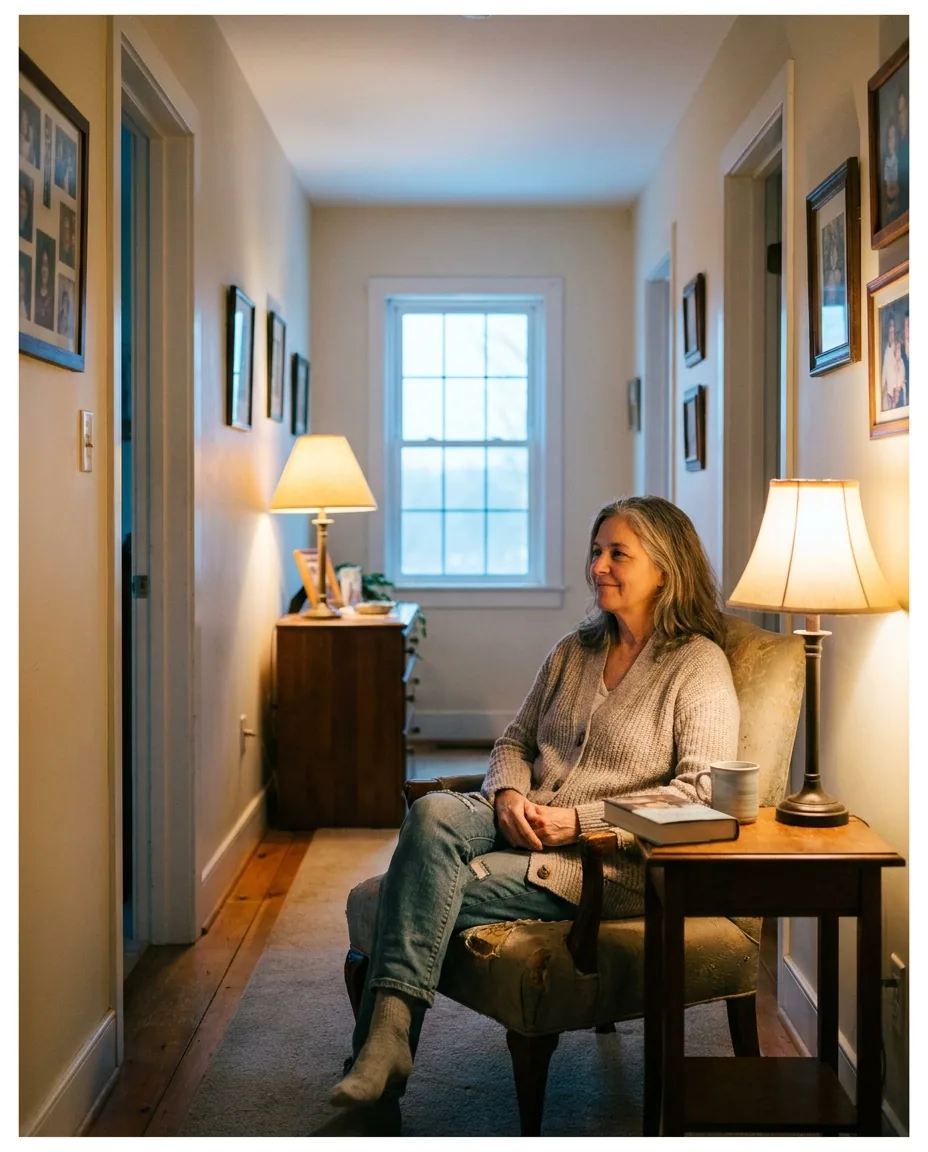
Where companion care fits, and where it does not
Companion Care is one of the named services Endurance Home Care provides, and this is the part of the week it is built for. A caregiver comes on a schedule you set and the hours are spent with your parent rather than around them: talking, cooking, running the errand together, going to the thing they stopped going to alone.
What it is not is medical. Companion care is support and company. It is not a treatment for anything, it does not act on any of the risks named further up this page, and nobody should choose it instead of talking to a doctor about them. Caregivers support, remind, accompany, and coordinate. That is the whole scope, and stating it plainly is more useful to a family than implying otherwise.
For what a standing schedule looks like in practice, see regular companionship visits in Fairfield County.
- Stamford, 65 and older
- 15.9%
- of 135,806 residents
- Serving
- Connecticut, New Jersey and New York
- License
- HCA.0002450
- Client support
- (203) 936-6847
Endurance Home Care provides care at home in Connecticut and New Jersey, with companion care only in New York. Skilled nursing, home health aides and physical therapy in Connecticut are provided by Endurance Home Health.
Questions families ask
is loneliness dangerous for elderly people
Yes, the research treats it as a health risk. The 2023 US Surgeon General advisory reports that loneliness and social isolation increase the risk of premature death by 26% and 29% respectively, and that lacking social connection can carry a risk comparable to smoking up to 15 cigarettes a day. For older adults the advisory also links chronic loneliness to roughly 50% higher dementia risk.
Why are older adults more at risk for loneliness?
The National Institute on Aging points to changes that stack up with age: hearing, vision, and memory loss, disability, trouble getting around, and the loss of family and friends. Each one shrinks the circle a little; together they can close it. That is why re-opening the week with regular, reliable company matters more after 65.
Can companion care help with loneliness?
Companion care puts scheduled, dependable company back into the week: someone to talk with, cook with, run errands with, and go out with. The National Institute on Aging observes that people who engage in meaningful activities with others feel a sense of purpose and report feeling more connected. Companion care is support, not treatment, and Endurance Home Care frames it exactly that way.
One light on, a quarter mile of dark windows.
daily-living companion care across Fairfield and New Haven counties, Connecticut, from an agency licensed by the state.