
Care options
Someone within earshot when being alone is the risk.
Available in Connecticut and New Jersey. Most families arrive after a fall or near miss. New York service is companion care only, without hands-on mobility support.
What is daily-living safety and mobility support at home?
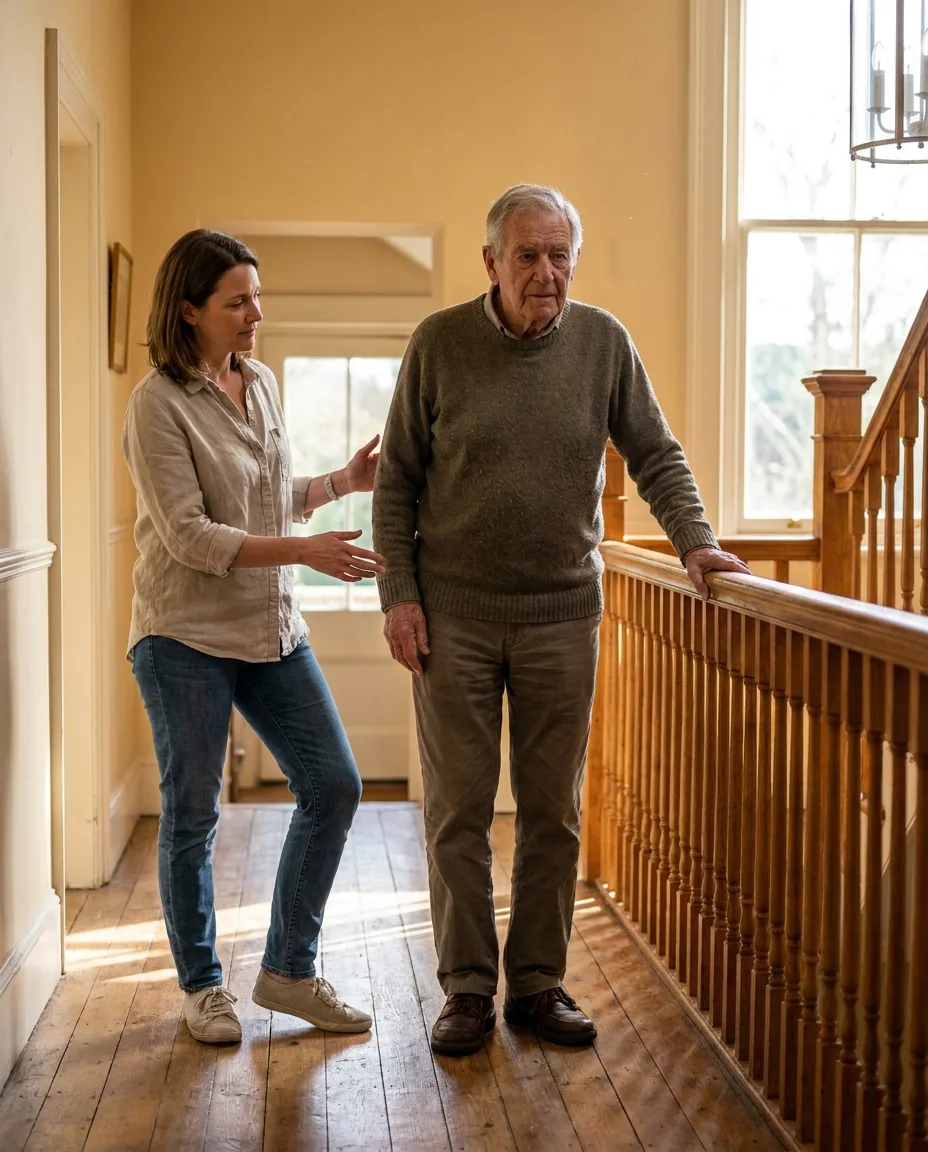
Daily-Living safety and mobility support means a caregiver being present and assisting at the moments when risk is highest: transfers, stairs, bathing, and moving around the home. It includes keeping routes clear, supporting a therapist's routine, and reporting changes to the family. It does not include therapy, clinical assessment, or any guarantee of preventing a fall.
What a caregiver does
Presence at the transitions, which is where most incidents happen
- Standing by, or assisting, for getting in and out of bed
- Support with chair transfers and standing from low seating
- Being present on the stairs rather than at the bottom of them
- Assistance in and out of the bath or shower, at the person's pace
- Keeping walkways, rugs, cables, and clutter out of the routes that get used at night
- Making sure the walking aid is actually within reach, which it often is not
- Encouraging the exercises a physical therapist has already set
- Noticing a change in steadiness and reporting it, in writing, the same day
Where we draw the line
We will not tell you this prevents falls
It is the claim this whole category makes, and it is not one anybody can substantiate.
A person can fall while a caregiver is in the room. Presence changes what happens next: how quickly someone gets help, whether they spend two hours on the floor, whether the family learns about it that day. Those outcomes are worth a great deal, and they are what this service is honestly for. Describing it as prevention would be a stronger advertisement and a false one, and it would set up exactly the sense of betrayal that follows the first fall.
The honest part
When this is not enough
A different answer fits better when
- Falls are frequent and unexplained. That is a clinical question, not a staffing one, and it needs a doctor before it needs more hours.
- Someone needs physical support that is beyond safe manual handling for one caregiver.
- The home genuinely cannot be made navigable, and the modification cost outweighs the benefit of staying.
- The risk is highest at night and nobody is awake. That is awake overnight care, which is a different service.
If any of these describes your situation, say so on the call. A responsible advisor should tell you when a different setting fits better, and ours are asked to.
Questions about safety at home
Can a caregiver stop my mother from falling?
No, and anyone who tells you otherwise is selling you something they cannot deliver. A caregiver can be present at the moments when risk is highest, assist with a transfer, keep a route clear, and get help quickly if something happens. Those things change the odds. They are not a guarantee, and we will not describe them as one.
What does mobility support actually involve?
Being there for the transitions: getting out of bed, in and out of a chair, on and off the toilet, in and out of the shower, and on the stairs. It also means noticing when something has changed, such as a new hesitation or a hand reaching for furniture that was not needed last month, and telling the family so it can go to a clinician.
Is this the same as physical therapy?
No. Physical therapy is a clinical service delivered by a licensed therapist with a treatment plan. A caregiver can support the routine a therapist has set and encourage the exercises, and cannot design, adjust, or deliver the therapy itself.
What about a medical alert button?
They are useful and they are a different thing from care. A button works when the person can press it and is willing to. Caregiver presence works when they cannot. Many households sensibly use both, and we are happy to say when a button is the more proportionate answer.
Related: personal care, awake 24-hour care, and the home safety checklist.
Do we come to you?
Full daily-living care in Connecticut and New Jersey, companion care only in New York. Coverage runs by town, so check yours before you call.
- Full daily-living care
- Companion care only
- Not served
Full daily-living care
- Fairfield County, CT
- New Haven County, CT
- Bergen County, NJ
- Essex County, NJ
- Morris County, NJ
- Somerset County, NJ
- Union County, NJ
Companion care only
New York is companion care only. We do not hold a New York State licence and do not provide hands-on personal care there, such as bathing, dressing, toileting or transfers.
Coverage is by town rather than by county line, and the honest answer for a specific address is sometimes no. Check your town or ask when you call.