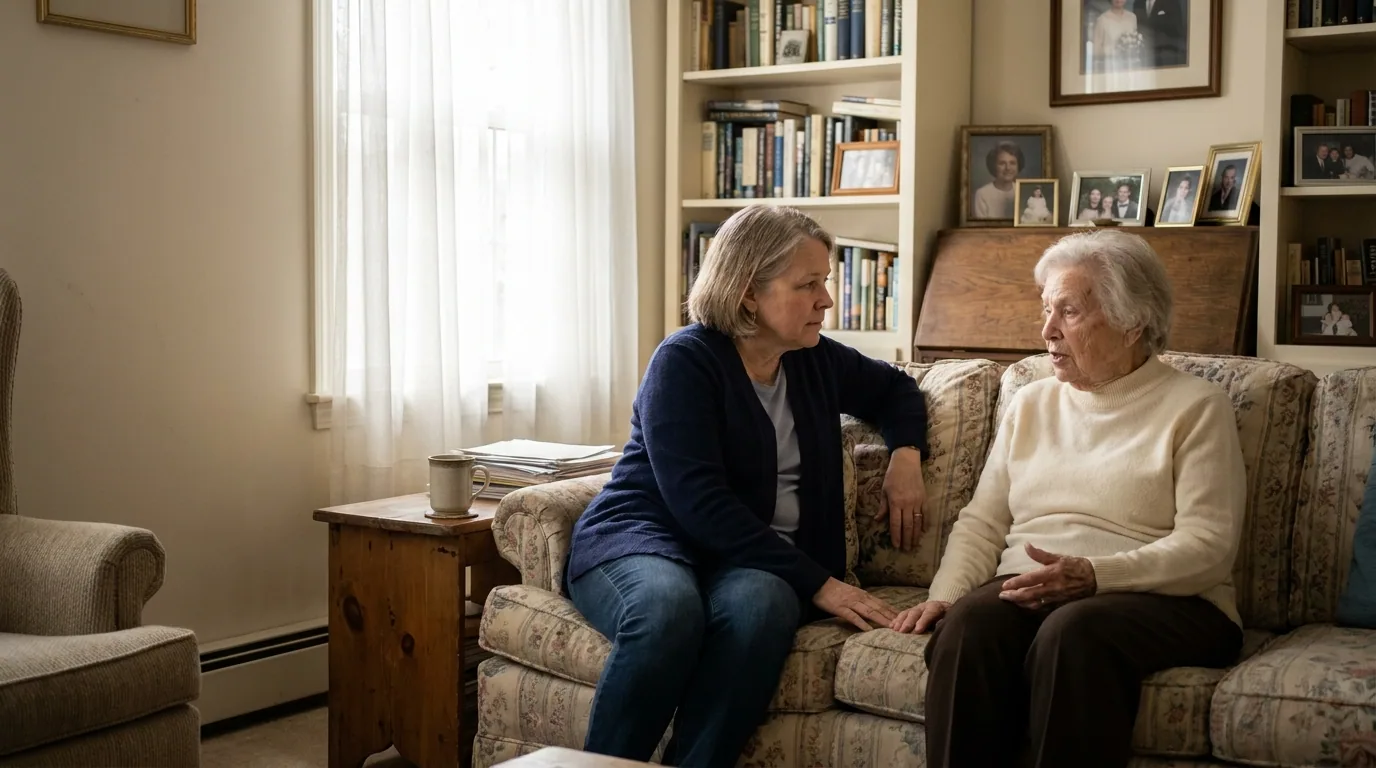




In a nursing home
A licensed medical facility, with a room and a floor shared with other residents.
At home
The house already lived in, with its own rooms, its own hours, and its own front door.
Two lines on one sheet, and the honest answer about where they part.
Endurance Home Care in Stamford states the Connecticut numbers plainly: a semi-private nursing home room runs a median $15,208 per month in Long Term Care Navigator's 2026 tables, while 40 weekly hours of daily-living care at home runs about $6,864.
A nursing home provides 24-hour skilled nursing in a licensed medical facility; home care brings daily-living support into the house: personal care, homemaking, companionship, supervision. In Connecticut a semi-private nursing room runs a median $15,208 a month in Long Term Care Navigator's 2026 tables, while 40 weekly home care hours run about $6,864. Medical need, not price, should decide first.
Both figures come from Long Term Care Navigator's 2026 Connecticut tables, and both are medians rather than quotes. The hours a household actually needs are what move its own number, which is why the amber line is a range and not a point. The gap between the two is wide enough to matter and narrow enough to close when coverage has to run around the clock. One thing neither line shows: because most long term care is daily-living, Medicare and most health insurance do not pay for it, in a nursing home or in the community. Planning around that early costs far less than discovering it late.
A nursing home is a medical setting: skilled nursing staff on site, around the clock, for conditions that need that level of staffing. Home care is not a smaller version of it. It is a different category of help, daily-living throughout, where caregivers support, remind, accompany, and supervise, and where the household keeps its own routine. Start with the medical question, because it settles the setting before price ever enters the conversation.
Does a physician say the condition needs facility level medical staffing around the clock?
A nursing home is the setting built for that, and no amount of hours at home substitutes for it. If the situation is comfort focused at the end of life instead, the comparison you want is home care vs hospice.
Meals, bathing, dressing, errands, reminders, company, and somebody within earshot. That is what home care carries. If the real question is whether a different residence would be easier than the current house, read home care vs assisted living.
Nothing about the parent has to change for that to be true. Scheduled coverage that gives the caregiver a stretch back is its own arrangement, and it is called respite care at home in Stamford.
Same four questions, answered in each setting. Drag the shelf sideways to read the rest.
A licensed medical facility, with a room and a floor shared with other residents.
The house already lived in, with its own rooms, its own hours, and its own front door.
Skilled nursing staff on site around the clock, which is the whole reason the setting exists.
A matched caregiver providing daily-living support: personal care, homemaking, companionship, supervision.
Continuous by design. Nights and weekends are staffed the same as weekday afternoons.
Available as 24/7 care or a live-in arrangement, so coverage can run continuously for daily-living needs.
A median $15,208 for a semi-private room in Connecticut, Long Term Care Navigator 2026.
About $6,864 for 40 hours a week in Connecticut, same survey, same year.
When a physician says the condition needs medical staffing on site around the clock, that is the answer, and hours at home are not a cheaper version of it. Endurance solely provides daily-living care, so this is a line we hold rather than a line we argue with. If a call ends with us saying the need is beyond what we do, the call still did its job. Connecticut has a public yardstick worth borrowing here: the state runs a program to help eligible residents who are at risk of nursing home placement stay in their homes, and it describes that risk as needing help with critical everyday needs such as bathing, dressing, eating, taking medications, and toileting. Needs at that level often stay at home. Needs above it usually do not.
Around the clock clinical presence, ordered by a physician.
Bathing, dressing, meals, reminders, company, supervision.
Treatment against support. It does not move, and neither do we.
When the need is not medical, the house does not have to be traded for the coverage.
In Connecticut and New Jersey, Endurance's types of care include 24/7 care and live-in arrangements, which is what makes the comparison real rather than theoretical. Supervision, personal care, meals, and companionship can run continuously in the same rooms, on a schedule the household sets and changes as the need changes. Nights get covered. Mornings get covered. The address stays the same, the neighbours stay the same, and the routine that a person has kept for decades keeps running. What it never includes is medical treatment, and that boundary is the reason the rest of it can be stated so plainly. New York service is companion care only.
Fairfield County and New Haven County, Connecticut. Connecticut License HCA.0002450.
Sometimes the nursing home is the right call, and we will say so out loud rather than sell you hours you do not need.
The fastest way past a comparison table is one conversation with somebody who has no reason to flatter either option. Call the Client Support Line at (203) 936-6847 and a person answers, or schedule a free consultation and we come to you. Either way you get a straight read on which setting the situation calls for, from an agency registered with Connecticut as HCA.0002450.
Someone whose physician says the condition requires facility-level medical staffing around the clock. Endurance provides solely daily-living care and will tell you plainly when a need is beyond it. For daily living support below that medical threshold, home care can carry the load.
At most schedules, substantially: about $6,864 a month for 40 weekly hours versus a $15,208 median for a semi-private nursing room in Connecticut (Long Term Care Navigator 2026). Round-the-clock home coverage narrows the gap. The comparison only holds when home care can actually meet the care need.
Yes, for daily-living needs. Endurance's types of care include 24/7 care and live-in arrangements, so supervision, personal care, meals, and companionship can run continuously at home. What it cannot include is medical treatment; that line is absolute and we keep it.
The right answer is whichever one your parent can actually live inside.
Home care serves Connecticut and New Jersey; New York service is companion care only. Connecticut registration HCA.0002450.
Call (203) 936-6847