
10 July 2026 · 5 min read
How to Help a Parent Who Hoards Without Pushing Them Away
Learn how to help a parent who hoards without causing shame, conflict, or resistance while making their home safer over time.
A Safer Way to Address Hoarding While Protecting Your Relationship
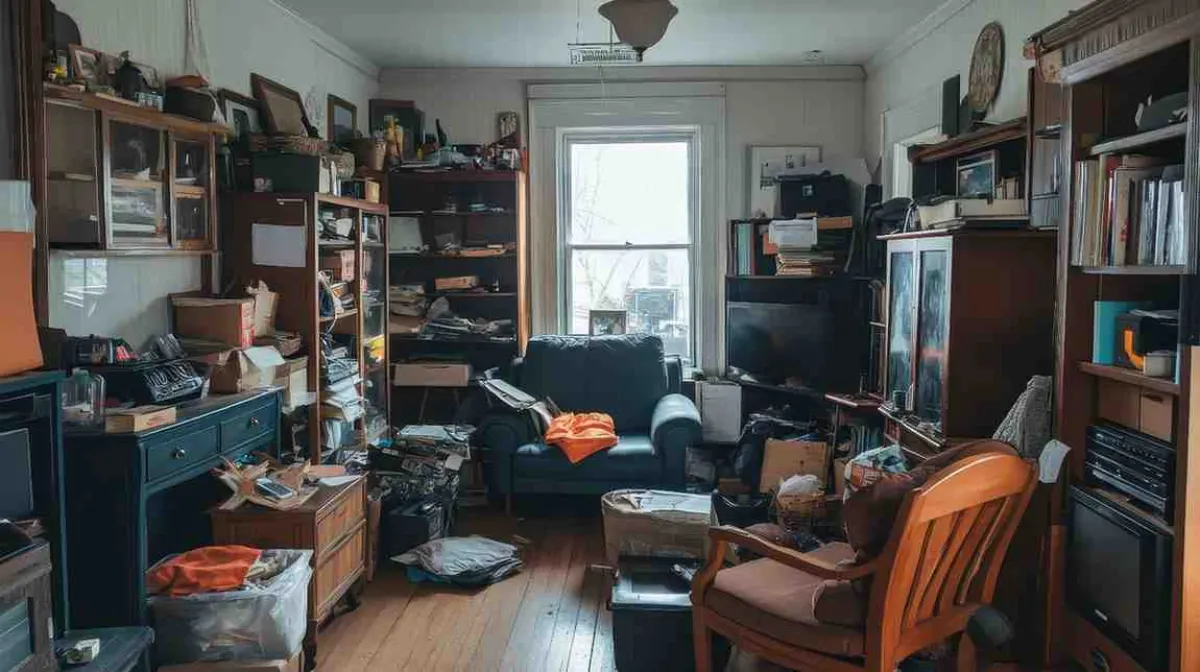
Walking into a parent’s home and realizing how much has accumulated is one of those moments that stays with you. Stacks of newspapers from years ago. Bags of items saved for reasons that aren’t clear. Pathways through rooms that used to be open. The house that was familiar and safe now feels different, and underneath the concern about the clutter is something harder to name: the awareness that bringing it up is going to be a fight, and that the fight might not accomplish anything.
Hoarding in older adults is more common than most families expect, and more complicated than it looks from the outside. Understanding what’s actually driving the behavior changes how families approach it, and that shift in approach is often the difference between a conversation that opens a door and one that slams it shut for months.
Creating a safer living environment is at the heart of what homemaking services for older adults address, and for families navigating a hoarding situation, that kind of consistent, supportive presence in the home often accomplishes what confrontation cannot.
Why Hoarding Develops in Older Adults
Hoarding in seniors isn’t simply messiness or laziness, and treating it that way is one of the fastest ways to shut down any productive conversation about it. For many older adults, the accumulation of belongings is deeply connected to experiences and emotional needs that have nothing to do with the objects themselves.
Loss is a significant driver. Older adults who have experienced the death of a spouse, the departure of children from the home, or a significant reduction in their social world sometimes develop strong attachments to objects as a way of maintaining a sense of connection and meaning. Getting rid of things can feel, at a very real psychological level, like losing something else in a life that has already involved significant loss.
Anxiety and depression, both common in older adults and both frequently undiagnosed, contribute to hoarding behavior in specific ways. Anxiety makes decisions feel dangerous. The possibility that a discarded item might be needed later, however unlikely, feels like an unacceptable risk. Depression reduces the energy and motivation required to sort, organize, and let go of things, allowing accumulation to continue unchecked.
Cognitive decline adds another layer. The organizational thinking required to categorize belongings, evaluate their utility, and make consistent decisions about what to keep is exactly the kind of executive function that dementia and mild cognitive impairment affect early. A parent who seems to be making irrational decisions about their belongings may be dealing with cognitive changes that make rational decision-making genuinely difficult, not choices they’re making willfully.
In some cases, hoarding is a lifelong pattern that simply becomes more visible and more hazardous as the person ages and their ability to manage it decreases. In others, it develops later in life in response to specific circumstances. Either way, the behavior is rarely as simple as stubbornness.
Why Confrontation Rarely Works
The impulse to go in and start clearing things out, or to sit down and explain logically why the situation needs to change, is understandable. It’s also almost universally counterproductive.
For a person whose belongings represent safety, connection, and meaning, having them removed or criticized doesn’t feel like help. It feels like an attack. The response is predictably defensive, and once a parent feels that their home and their choices are under siege, re-establishing the trust needed for any productive conversation becomes significantly harder.
Shame is another consequence of direct confrontation that families often don’t anticipate. Most older adults with hoarding behavior are aware on some level that the situation has become a problem. Adding external pressure and judgment to an internal awareness that is already uncomfortable tends to produce withdrawal and increased resistance rather than openness to change.
The families that make the most progress are generally the ones who approach the situation slowly, from a position of genuine curiosity rather than urgency, and who focus on the relationship with the person rather than the condition of the home.
What Actually Helps
Progress in hoarding situations tends to be slow, and expecting a quick resolution usually makes things worse. What works is a consistent, patient approach built around several principles.
Start with safety rather than aesthetics. A conversation about fire exits being blocked, or floor pathways being difficult to navigate, is more likely to land than a general statement about the amount of stuff. Connecting the conversation to your parent’s wellbeing and safety, rather than to how the home looks, shifts it from a judgment to a concern.
Let them lead the sorting process. Decisions about what to keep need to feel like their decisions, not ones being made for them. Sitting with a parent and going through things together, at their pace, with genuine respect for their attachment to specific items, builds a different kind of momentum than organizing done without their involvement.
Involve professionals where appropriate. A therapist with experience in hoarding disorder can provide support that family members simply cannot, partly because the therapeutic relationship carries different weight than the family one and partly because effective treatment for hoarding involves specific approaches that take time to learn.
For families in Connecticut and New Jersey, in-home support can provide a consistent presence that gently supports organization and safety. In New York, Endurance provides companion care only; that non-hands-on service can support organization but does not include personal care.
When Professional In-Home Support Changes the Dynamic
A trained caregiver who develops a consistent relationship with an older adult can accomplish things that family members often cannot, precisely because the relationship doesn’t carry the same history. There’s no old conflict, no accumulated frustration, no dynamic of parent and child where authority and independence are always somewhere in the background.
Homemaking support that includes help with organization, cleaning, and maintaining safe living spaces works differently when it’s provided by someone the parent has come to trust and feel comfortable with. The same tasks that felt threatening when a child suggested them feel manageable when they’re part of a routine established with someone who isn’t judging the situation.
Endurance Home Care provides in-home support in Connecticut and New Jersey for situations where the approach matters as much as the service. In New York, Endurance provides companion care only; its New York service is non-hands-on and does not include personal care.
This Doesn’t Have to Be a Battle
Helping a parent with a hoarding problem is rarely a single conversation or a single weekend of effort. It’s a long process that works best when it’s built on patience, relationship, and consistent support rather than urgency and confrontation.
Families who are navigating this and need guidance on what in-home support could look like for their specific situation can connect with a home care team serving CT, NY, and NJ and have a real conversation about what’s possible.
Published 10 July 2026. Written by Endurance Home Care. What we offer, and where, is on the services page.