

Transitional care / 72 hours
Transitional Care After a Hospital Stay
Nobody hands you a plan for the drive home.
- Discharge day
- The first 72 hours
- The first weeks
- Steady again

The first days home decide the next six months, and nobody should be doing them alone.
Endurance Home Care, a home care agency registered in Connecticut as Homemaker Companion Agency HCA.0002450, provides transitional care after a hospital stay through hourly aides, 24/7 live-in support, and its Endurance Homebound program built around the first 72 hours home.
Transitional care is one of four ways Endurance schedules care, alongside 24/7 care with live-ins, hourly care, and care inside a facility. What it is not is medical. Endurance Home Care solely provides daily-living care. Aides support, coordinate, remind, and accompany. They do not treat, diagnose, or administer anything.
Where a clinician has ordered skilled nursing or therapy, those visits come from a home health agency, and our hours sit in the gaps between them. That boundary is the first sentence a family should be able to say out loud, because it decides who to call for what. Somebody is sent to change a dressing. Nobody is sent to make lunch, clear a path to the bathroom, or drive to the follow up appointment. The Connecticut registration on our door, Homemaker Companion Agency HCA.0002450, is a registration for exactly that second list.

Going back in is common, and it happens sooner than most families plan for.
13.9
Thirty day all cause hospital readmissions per 100 index admissions in the United States, holding flat from 2016 to 2020. AHRQ HCUP Statistical Brief, 2016 to 2020 data
36.1%
Share of all thirty day readmissions that happen within seven days of discharge. AHRQ HCUP Statistical Brief, 2014 national data
Neither number predicts anything about one person. Together they say something plainer: the risk is front loaded. The week that usually gets the least help at home is the week that matters most, because it is the week the discharge folder is still on the counter and none of the routines have been rebuilt. That is the week we staff first.
what to watch in the first 72 hours home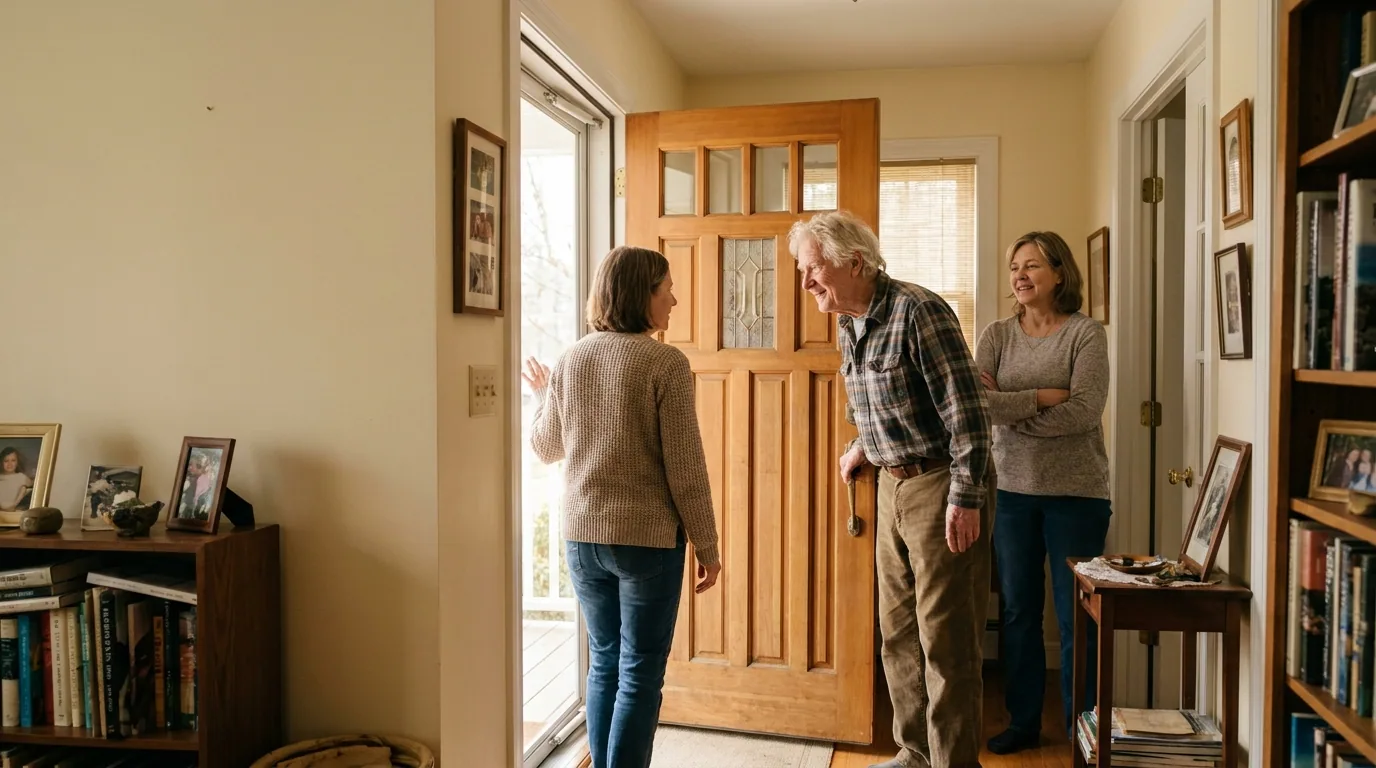
What Medicare pays for, and what it does not
The visits it does cover
Medicare covers home health services only for people who need part time or intermittent skilled services and who are homebound. That means nursing or therapy, ordered by a clinician and delivered in visits, on the agency's schedule rather than yours.
The line it does not cross
Medicare's home health benefit does not pay for 24 hour a day care at home. Families read the coverage page, see the words home health, and reasonably assume somebody will be in the house. The benefit was never built for presence.
The gap that shows up on day two
So the covered visits handle the dressing and the exercises, and the uncovered hours handle everything else: meals, bathing, reminders, the ride to the follow up, and being there when nobody else can be.
Most households run both
Skilled visits on their schedule, daily-living hours on yours. Ask the discharge planner which agency is bringing the skilled visits and on which days, then build private hours around the empty days rather than on top of the full ones.
Coverage terms above are stated from the federal program’s own page. Medicare.gov home health services, retrieved 2026
questions to ask the hospital discharge plannerWhat actually has to happen in the house
Start from what broke when they came home, not from a service menu. Every branch below ends in one of the seven things a Connecticut homemaker companion agency is registered to do. None of them is medical.
Endurance provides hospital-to-home care and the hands-on services below in Connecticut and New Jersey. New York service is companion care only.
What is hard right now
- Getting clean and dressedPersonal careHands on help with bathing, dressing, and moving safely from room to room.
- The kitchen and the laundryHomemakingMeals, light housekeeping, and a kitchen somebody can actually stand up in.
- The hours aloneCompanion careConversation and company, which is most of what the first weeks are short on.
- Memory that slipped in the hospitalMemory support at homeFamiliar routines held steady, without any clinical claim attached.
- Getting to the follow upTransportationRides to the appointment, the pharmacy, and back home again.
- The scheduled reminder nobody gaveMedication remindersA verbal prompt at the right hour. Caregivers never select, handle, administer, set up, manage, or verify medication or doses.
- Being alone at allSafety supervisionSomebody within earshot while strength and confidence come back.
Most households need three or four of these, not all seven, and the mix changes by the second week. A surgical recovery leans on transportation and personal care, which is why home care after a hip replacement looks different from a recovery that started with a fall. Before the discharge, walk the list against a hospital discharge checklist for an elderly parent so the gaps are named while there is still somebody at the hospital to ask.

Two things built for the first days
Both are ours, and neither is clinical. They exist because the hours after a discharge are the hours a household is least able to organize itself.
Program
Endurance Homebound
Our branded hospital to home program, built around the first 72 hours after a discharge as a plan for the first days home rather than a schedule you assemble at the kitchen table on the way out of the hospital. It is staffing, coordination, and presence, on the days the calendar is thinnest.
the Endurance Homebound program72
Hours the program is built around, counted from the moment the car pulls into the driveway. Endurance Home Care program definition.
Optional layer
Endurance Technology Solutions
24/7 virtual care using 100 percent audio technology. It alerts Endurance so the team can respond promptly. It does not diagnose, treat, assess, or watch anyone’s health, and it is never a substitute for the people in the house.
Coming home to Fairfield County
The discharges we build around start at hospitals across the two Connecticut counties we serve. Greenwich Hospital, part of Yale New Haven Health, sits at 5 Perryridge Road in Greenwich, and the drive home from it ends at a front door we have to be standing at. We are a private agency and are not affiliated with any hospital.
Discharge day
The paperwork arrives faster than the plan does. We take the discharge date on the phone and staff backward from it.
The first night
Somebody in the house, or somebody within earshot, on the night the household is most improvised.
The first weeks
Meals, bathing, reminders, and the rides to follow up appointments, on a schedule you set and change.
Steady again
Hours come down as strength comes back. Most households end up somewhere lighter than where they started.
Connecticut License HCA.0002450 · New Jersey License HP0435100 · Connecticut DPH License 9915786 (Endurance Home Health). Endurance Home Care provides care at home in Connecticut and New Jersey, with companion care only in New York. Skilled nursing, home health aides and physical therapy in Connecticut are provided by Endurance Home Health.
how our transitional care service worksWhat the hours cost, next to the alternatives
$6,864
In home care in Connecticut at 40 hours a week, per month.
Long Term Care Navigator, 2026 Connecticut figures.
$9,118
Connecticut assisted living, median monthly cost.
Long Term Care Navigator, 2026 Connecticut figures.
$15,208
A semi-private nursing home room in Connecticut, per month.
Long Term Care Navigator, 2026 Connecticut figures.
Transitional care rarely looks like 40 hours a week, and it rarely stays at one number. Most households buy heavily for the first stretch, when someone has to be there for the parts of a day that used to be automatic, and then cut back as strength returns. That shape is why the comparison above is useful for direction and useless as a quote: a facility bills a month whether the month is hard or easy, and hours bill only for the hours.
Some families pay for these hours through a long term care insurance policy. Policy terms differ enough that the only answer worth acting on comes from reading the one you hold. Bring it to the consultation and we will read it with you.

Questions families ask
What is transitional care after a hospital stay?
Transitional care is daily-living support at home during the weeks after a hospital discharge: personal care, meals, medication reminders, rides to follow-up visits, and steady supervision while strength returns. It runs alongside any Medicare-ordered home health visits, which handle skilled nursing and therapy. Endurance Home Care provides it hourly, around the clock, or through its Endurance Homebound program built around the first 72 hours home.
Is transitional care the same as Medicare home health?
No. Medicare home health is skilled care: nursing or therapy that a health care provider orders, limited to part-time visits for people who are homebound. Transitional care from Endurance is daily-living: bathing help, meals, reminders, rides, and supervision between those visits. Many families run both at once, and Medicare does not pay for 24-hour care at home.
How fast can home care start after a hospital discharge?
Call our Client Support Line at (203) 936-6847 and we start from there. Families describe being matched right away with an aide, and say the owner made everything easy from the very first call. We do not publish a fixed timeline, so the honest answer is one phone call: tell us the discharge date and we build around it.
The discharge date is the only thing we need to start.
daily-living transitional care across Fairfield and New Haven counties, from an agency registered with the State of Connecticut.
Call (203) 936-6847